Student Cases
The student cases are your chance to apply what you have learned through the course readings, study questions and games to a ‘real world’ sustainability assessment.
In this assignment, you choose a case and evaluate its pursuit of sustainability, setting out your conclusions in a short policy memo. We have prepared research guides for three cases—the country of Uganda, the Brazilian state of Acre, and China’s Pearl River Delta, but these cases are just ones that we provide a jumping off place for. Their is no reason that you cannot pick another case of your choosing. The one “requirement” is that your case should ideally be placed based (i.e. a city, region, country) rather than say a supply chain or a specific sustainability challenge like ocean plastics as it will be difficult to answer many of the ‘your case’ questions in each of the units if it is not place based.
The student case material provided here serves two kinds of readers. If you are working through this course on your own, a case is how you practice applying what you are learning to a real place, and it will give your work through the units a destination. If you are teaching with this material, the cases are a complete applied assignment, ready to use or adapt. (A short note for instructors is linked at the bottom of this page.)
Why regions?
A central challenge in the pursuit of sustainability is how to integrate the general knowledge of core principles with the specific knowledge of local contexts to provide useful guidance for action on the ground. The student cases are where you practice exactly that.
A region is not the only way to bound a nature-society system for analysis. You could organize a case around a supply chain (whether a commodity like beef or an input like nitrogen fertilizer), an industry, or a specific challenge such as ocean plastics, and use what you learn in this course to understand the barriers and opportunities for pursuing sustainability in any of them. For this assignment we use regions because regional governments articulate goals you can evaluate against, and because a region makes you work across the full range of resources, rather than the few that a single supply chain touches. A region here can be any spatially bounded place with a government that answers for it—a country, a state or province, a city. Every boundary hides something, however—a region’s coffee prices are set abroad, and its deforestation responds to demand on other continents. Part of the analysis, and part of the work of the theory taught in this course, is to notice what a chosen boundary conceals, and what moving it—looking more carefully at horizontal and vertical connections—reveals.
How a case works
A case runs in four steps, plus an optional fifth.
- Choose your region and read its research guide. Each region covered here has a guide written for this course: a cited survey of its goals, history, well-being, resources, and nature-society dynamics. If you choose a region of your own, use the guides as models of the ground to cover.
- Take on the role of an outside evaluator. You will assess the region’s pursuit of sustainable development around three questions, described in the next section.
- Do your own research—including talking to people. You will read the guide’s sources critically, go deeper where it matters for your analysis, and interview at least two people who know the region well.
- Produce a policy memo. Your evaluation culminates in a short memo that identifies the region’s key barriers and analyzes and recommends a specific intervention.
- Add an oral briefing (optional). If you are working with a group—especially in a classroom—you can also prepare a short oral briefing of the same evaluation.
The sections below take these up in order.
The research guides are a springboard
Each region comes with a research guide. It is important to understand that this guide is only a springboard for your own inquiry into the region. Your job is to become well-versed in the region and its potential to effectively pursue sustainability. It is thus necessary to read the guide and its linked sources critically—but simply mastering the guide and its citations is not enough. Background material on a place has never been easier to gather; the harder and more valuable work is the first-hand inquiry you build on top of it—the wider literature, the primary sources, and above all the people you talk to. You will need to delve into the available literature on the region, as well as the broader literature in sustainability science and related fields. You will not be able to go deep on everything, and you should not try. Read the guide and its linked sources as your foundation; then choose the few threads where deeper research will actually change your analysis, and spend your depth there.
Taking on the role of an outside evaluator
To give the work a focus, imagine you are preparing your evaluation for the United Nations Sustainable Development Solutions Network (SDSN), a high-level body set up under the auspices of the UN Secretary-General to promote integrated approaches to implementing the Sustainable Development Goals. Whether you are working alone or as a team, you take on the role of an outside evaluator asked to bring a fresh perspective on the region’s pursuit of sustainable development, organized around three questions:
- How is the region doing in articulating shared goals for its sustainable development, and at both making and tracking progress toward those goals?
- What are the region’s principal obstacles to further progress, and the most important opportunities for overcoming those obstacles?
- How can relevant knowledge drawn from scholarship and experience around the world be better linked with action on the ground in the region for the successful pursuit of sustainability?
Requests for outside evaluations like this are not uncommon in today’s world. Countries in the OECD, for example, are regularly evaluated on their environmental and sustainability performance by outside experts from other member countries. What these experts inevitably lack in insider knowledge, they make up for by being free from local political alliances and by having access to relevant experience from elsewhere. You should not be daunted by the fact that you won’t have the familiarity a local researcher might. Your outsider perspective, and your ability to bring a fresh view of how sustainability is being pursued in the region, are what make your work valuable.
Each of these regions is already pursuing sustainability. Your challenge is not to convince anyone that sustainable development matters. It is to mobilize what you know and can learn to help them do better.
Expert interviews: the heart of the case
Expert interviews are the centerpiece of the student cases. They are particularly effective tools for developing a sense of the complexities of your region, and interviews with local experts are especially important for ensuring your recommendations are nuanced and respectful of local context and history. Experts can come from any sector—business, government, non-governmental organizations, academia, and even journalists.
Plan to interview at least two experts as part of your research into the region—and consider interviewing more. A step-by-step Interview Guide walks you through the full process: why interviews matter, how to identify the right people, how to reach out, and how to prepare for, conduct, and write up a good conversation. And keep this in mind: you will be surprised, if you send a polite and informed email, how many people—even those quite senior in their fields and organizations—are happy to spend thirty minutes sharing what they know.
What you produce
The work culminates in a policy memo. In Part 1, you identify the important barriers or problems that need to be addressed in the region’s pursuit of sustainability—kept short, about a page. In Part 2, you propose two or more alternative interventions that reasonable people in the region might consider, analyze the strengths and weaknesses of each using the frameworks from the course, and then recommend and defend the specific intervention you are convinced has the best chance of advancing a transition toward sustainable development.
The recommended intervention should not be too small (switching to LED lights) nor so large that it stops being a single intervention (fixing maternal mortality and restructuring agricultural subsidies at once). Rather, it should help resolve a problem that merits attention. The key to presenting it compellingly is to show that you have taken into account how it will interact with the rest of the complex nature-society system in the region. No one can do this perfectly. But serious reflection on what your intervention is intended to do, the obstacles it is likely to encounter, and the other effects it is likely to have, is an essential step on the road to more effective, if humble, policy work.
The full memo should run roughly five to seven pages (keeping it within that range may be one of your biggest challenges, but brevity is key to good policy writing). Write for an intelligent reader who is familiar with the general language of sustainable development—the Brundtland definition, the SDGs—but who has not taken this course. Use the frameworks taught here to inform your thinking, but either explain your points without course-specific jargon or introduce a necessary term with a brief definition.
A useful test as you write: assume the leader reading your memo already has the research guide, the World Bank’s reports, a national statistics office—and an artificial-intelligence assistant. What does your memo contain that they do not already have? The defensible answers are the integration that no single agency does; an outsider’s independence; your analysis of how the parts of the system interact; your assessment of the region’s capacities; and whatever your interviews surfaced that is not written down anywhere.
If you are working with a group, you can also prepare a short oral briefing of the same evaluation, delivered as if to the body that commissioned it.
For the fundamentals of policy writing, we recommend Eugene Bardach’s short guide, A Practical Guide for Policy Analysis: The Eightfold Path to More Effective Problem Solving. Bill and Alicia return to it regularly in their own policy writing.
The regions
Each region has its own research guide to get you started.
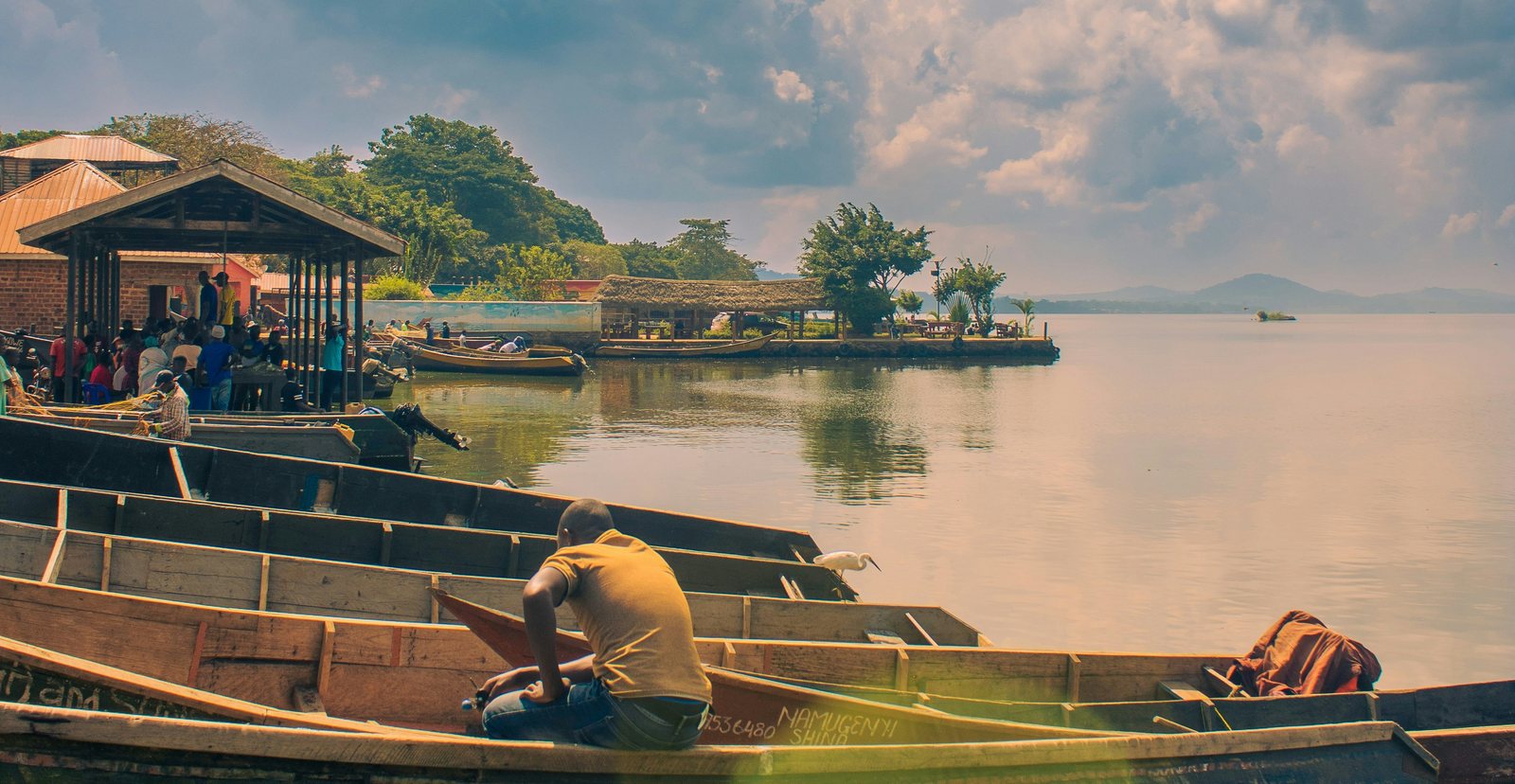
Pursuing Sustainability in Uganda
The East African nation of Uganda aspires to transform itself from a poor, rural society into a modern and prosperous country. The research guide grounds you in its goals, history, well-being, resources, and nature-society dynamics.
Image credit: Mpagi Philemon / Unsplash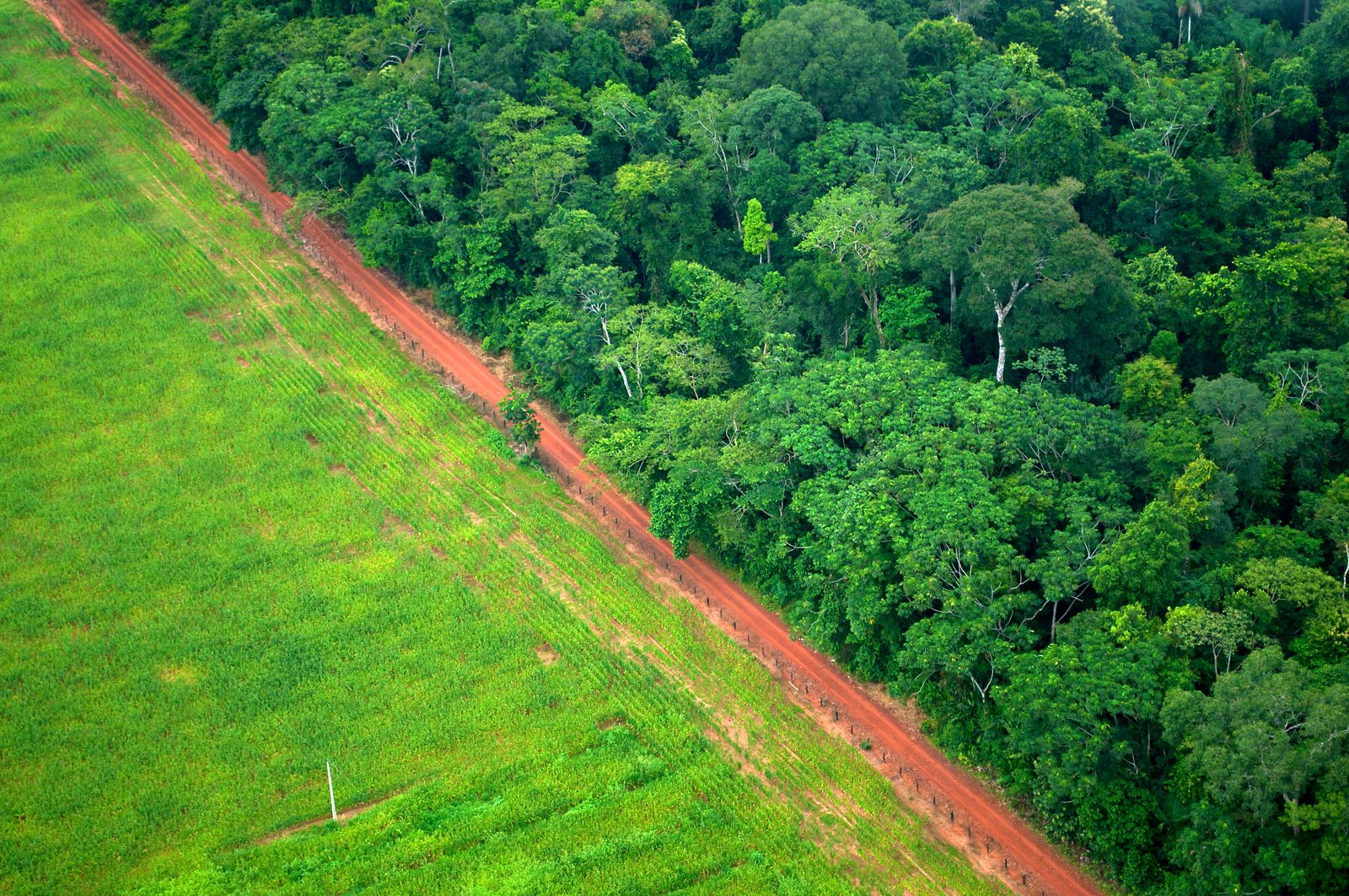
Pursuing Sustainability in Acre, Brazil
Acre, in the Brazilian Amazon, is where the rubber tappers' movement of Chico Mendes grew into a state government built on "forest citizenship." The research guide grounds you in the state's goals, history, well-being, resources, and its decades-long attempt to build a development path on the standing forest.
Image credit: Kate Evans/CIFOR (CC BY-NC-ND 2.0)
Pursuing Sustainability in the Pearl River Delta
The Pearl River Delta—Hong Kong, Shenzhen, Guangzhou, and their neighbors—grew from farmland into the world's largest urbanized region within a single lifetime. The research guide grounds you in the region's goals, history, well-being, resources, and nature-society dynamics.
Image credit: darmau / UnsplashWe expect to add further regions over time.
Teaching with these cases? See the note for instructors.