Pursuing Sustainability in Acre: A Research Guide
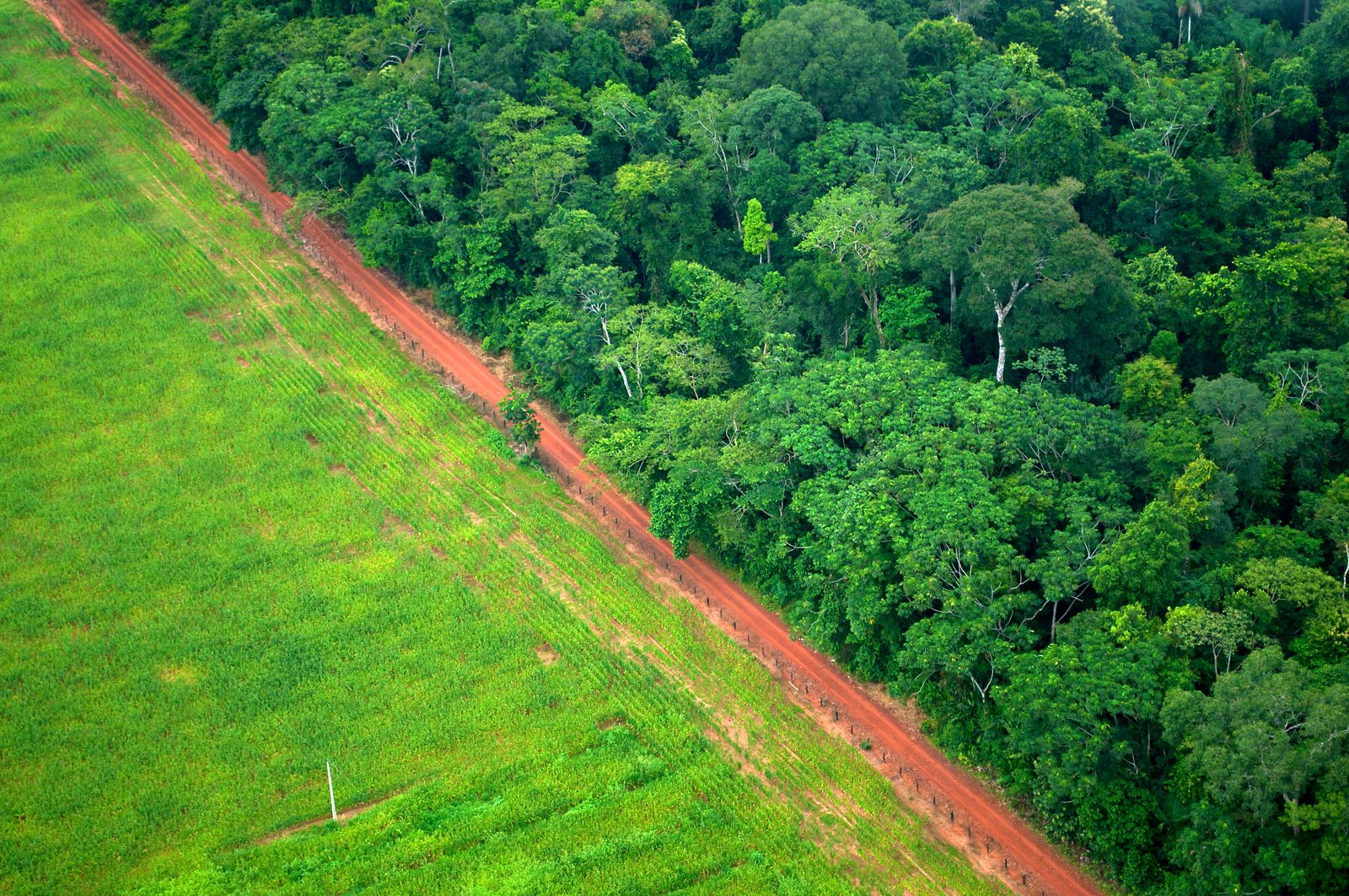
The forest–pasture boundary near Rio Branco, Acre. Photo: Kate Evans/CIFOR (CC BY-NC-ND 2.0).
How to Use This Guide
A central challenge in the pursuit of sustainability is how to integrate the general knowledge of core principles with the specific knowledge of local contexts to provide useful guidance for action on the ground. This research guide provides a foundation for applying the concepts and frameworks of the course to a concrete case: the Brazilian state of Acre, in the southwestern Amazon. As you progress through the course, you can return to this case to apply new concepts and frameworks:
- In Part 1 (Sustainable Development as a Conceptual Challenge), you can use this guide to assess Acre’s goals for sustainable development, the state of its resources, and the well-being of its people (Sections 1–4 below);
- In Part 2 (The Anthropocene as a Complex Adaptive System), you can analyze the complex dynamics of Acre’s nature-society system (Section 5);
- In Part 3 (Capacities Needed for the Pursuit of Sustainability), you can evaluate Acre’s capacities for pursuing sustainability (Section 6).
It is critical to understand that this guide is only a springboard for your own inquiry into Acre. Your job is to become well-versed in Acre and its potential to effectively pursue sustainability. That requires critically reading this document and the linked citations, delving deeper into the available literature on Acre, and exploring the broader literature in sustainability science and related fields. In the age of artificial intelligence, assembling and summarizing what has already been written about a place has never been easier. What remains scarce is different: new knowledge about Acre itself (your interviews will generate a little of it), and the ability to put the many parts together—goals, resources, well-being, system dynamics, capacities—into useful guidance for actual progress toward sustainability. That work of integration is what this case asks you to practice. Many of the mistakes that actors make in designing interventions to meet sustainable development goals involve a failure to fully grasp the complexity of the nature-society system in which they hope to intervene. You should be prepared to defend your chosen supporting evidence; this means conducting thorough, thoughtful research and analysis and using credible, well-chosen sources.
This guide is structured as follows:
- A brief introduction to the Acre case, including how actors in the region have framed their own sustainability goals.
- A look at the historical context that sets the stage for the modern-day pursuit of sustainability in the region.
- A descriptive overview of the state of human well-being in Acre today.
- A brief exploration of the resource base—natural and anthropogenic—in Acre today.
- Some links to interesting examples of complex nature-society system linkages in Acre, to give you a feel for the complexities of the region.
- Questions to guide your assessment of Acre’s capacities for pursuing sustainability.
- A note on expert interviews, with a pointer to the course Interview Guide.
1. The Acre Case: Context and Goals
This case involves the interactions of society and environment in the Brazilian state of Acre, one of the last remaining dynamic frontiers on earth. Acre is located in the westernmost part of Brazil and shares borders with Peru and Bolivia. The state covers approximately 164,100 square kilometers—a bit larger than the U.S. state of Georgia, and larger than many independent nations. The population of Acre was counted at 830,018 in the 2022 national census—well below the roughly 895,000 that pre-census estimates had projected, a reminder that even counting people in a remote, fast-changing region is hard. The Brazilian Institute of Geography and Statistics (IBGE) estimates the 2025 population at about 884,000. Acre is one of Brazil’s 26 states; like all of them, it has an autonomous state government with an elected governor and vice governor, a legislative assembly, and an appointed judiciary.
Acre is characterized by a hot and humid climate, and heavy vegetation. It is nearly entirely covered by the Amazon rainforest, and, compared to other Brazilian states, relatively lightly developed and populated (perhaps unsurprisingly, given that the state comprises approximately 0.4% of the country’s total population). Acre’s largest city is its capital, Rio Branco, home to about 44% of the state’s residents. The state contributes a comparatively small percentage to Brazil’s GDP (about 0.2%). Acre’s economy is primarily based on extraction of rainforest resources such as timber, rubber, and Brazil nuts; the service sector; and agriculture, including soy, poultry, and cattle. The cattle industry has grown markedly since the 2000s, though most agricultural holdings remain small-scale rather than highly industrialized, and the state has largely avoided the large-scale mining and hydroelectric projects that began elsewhere in the Amazon in the 1970s.
Much of the interest that has been focused on Acre involves the untapped potential of its landscape. Developers, both Brazilian and international, see in the vast tracts of rainforest its economic potential, whether for conversion to agricultural land for crops and livestock, mines for precious ores and minerals, or transportation infrastructure to improve transnational trade. This has sometimes put them at odds with the residents of Acre, who have sought to protect the rainforests and the wellbeing of local residents from outside interests. By the 1970s, a combination of rising beef prices, economic development, and national policies led to increased deforestation in the Amazon in general, and Acre specifically. In the latter half of the decade, activists like rubber-tapper-turned-environmentalist Chico Mendes (see Section 2 for further information) encouraged Acre residents to unite in opposition to the exploitation of their region. In the decades that followed, Acre became a leader in creating programs that sought to pursue development strategies that protected the environment and were socially equitable.
In the 2000s, the government of Acre launched a further series of measures aimed at promoting sustainable development in the region, culminating in a state-developed sustainable development plan, the Acre Social and Economic Inclusion and Sustainable Development Project, or PROACRE. The long-term goal of the program was to “increase the contribution of the forestry and agroforestry sector to economic growth and poverty reduction in the State of Acre (SAC) while keeping deforestation under control.” The World Bank-financed project ran from 2008 until it closed at the end of 2021. In its own completion report, the Bank rated the project’s outcome “moderately unsatisfactory”—a rare case of a funder saying plainly that a program fell short. For how the state frames its own goals today, the key documents are its ten-year development plan, the Agenda Acre 10 Anos (2023–2032), and its four-year plan (PPA 2024–2027), whose stated vision is “Acre, a land of opportunities, socially just and environmentally sustainable.” Two older instruments remain central to how those goals are pursued: the Ecological-Economic Zoning of Acre (ZEE), the territorial planning framework of the florestania era, and the State System of Incentives for Environmental Services (SISA, 2010), which aims to value the forest’s environmental services—above all, carbon—and to channel payments for keeping the forest standing to the communities that maintain it (see Sections 4.5 and 5). The state also maintains a plan for the prevention and control of deforestation and fires (PPCDQ), with annual deforestation targets it reports against each year.
In the years around 2020, Acre faced significant new threats—including from anti-environmentalist policies spearheaded by the federal government, increased economic pressure from without and within Brazil, and a series of devastating fires that swept across the Amazon—that further tested the region’s commitment to sustainability. In 2019, chiefs of two indigenous peoples announced a claim to the International Criminal Court (ICC) against the administration of President Jair Bolsonaro, stating that deforestation in the Amazon had increased “by 34.5% in one year, the assassination of indigenous leaders is at an 11-year high and environmental agencies have collapsed or face threats.” Sections 2 and 4.4 describe how national and state politics have shifted since.
Citations:
- World Bank. 2008–2021. “Acre Social and Economic Inclusion and Sustainable Development Project – PROACRE” (P107146). Washington, D.C.: World Bank Group. (The implementation completion report is public.)
- Government of Acre. 2023. Agenda Acre 10 Anos (ten-year development plan, 2023–2032). State Planning Secretariat.
- Government of Acre. 2023. Plano Plurianual (PPA) 2024–2027.
- Government of Acre, SEMA. Zoneamento Ecológico-Econômico do Acre (ZEE).
- Government of Acre, Institute for Climate Change (IMC). State System of Incentives for Environmental Services (SISA).
- Vox. November 25, 2019. “Brazil’s indigenous land is being invaded.” (Video.)
- IBGE. Acre: Panorama. Brazilian Institute of Geography and Statistics.
2. Historical Context
Acre’s rich landscape is coupled with a rich human history. The region was initially settled by humans some 2,000 years ago—some of whom are the ancestors of the indigenous peoples that still live there today. Europeans arrived in Brazil as early as the 1500s, in search of profitable resources to export from the New World to the Old. Brazil’s earliest export was wood, particularly from the valuable Pernambuco tree (also called “brazilwood”), which became a luxury commodity in Europe. European expansion into South America was not uncontested, and colonial settlers often encountered significant resistance from native communities. Yet in the decades that followed, Portuguese settlers continued to expand into the interior. They founded sugar cane plantations and mills, and sugar became Brazil’s primary export, and a key aspect of its economy. Gold deposits were discovered in the 17th century, and mining became another critical part of Brazil’s colonial economy.
Both of these industries relied almost entirely on African slave labor. Indeed, during the Atlantic Slave Trade, which took place during the 16th through 19th centuries, Brazil received the highest number of slaves of any part of the Americas—approximately 4 million slaves, or 40% of the total number of humans unwillingly transported from Africa. This history of slavery has had a lasting impact on the demographics of Brazil to this day.
Throughout the 1600s and into the 1700s, various European powers squabbled over the region, resulting in skirmishes and sometimes all-out war, including Portugal, Spain, and the Netherlands. Ultimately, the Spanish-Portuguese treaty of 1750 ended armed conflict between the two countries over South America, established borders between Spanish and Portuguese colonies (many of which remain the borders of modern-day nations), and ceded Brazil to Portugal. Throughout the 1700s, the Brazilian economy continued to expand, cultivating new commodities (such as coffee, cattle, and tobacco). Yet, the heavy toll of extraction of North and South American resources by European powers during the 1700s led to widespread conflict between colony residents and European rulers. In what is often termed the “Decolonization of the Americas,” successive waves of countries fought for and gained their independence during the late 1700s and into the 1800s. Like many other countries, Brazil gained independence in 1822, declaring itself an independent empire ruled by a monarch, and created its first constitution in 1824. However, this new independence would be the beginning of a series of internal rebellions, military coups, and political regime changes that would stretch well into the 20th century.
The 1800s saw the first major Brazilian incursions into the Amazon interior, which had previously been largely ignored in favor of more profitable and easy-to-access coastal regions. This was in part driven by the Amazon rubber boom that began in the late 1800s, which sought to expand extraction of this increasingly valuable resource; this demand in turn was driven by global industrialization. Acre accordingly saw an influx of Brazilian settlers from the east, seeking gold and rubber—despite the fact that the region was actually governed by Bolivia, rather than Brazil; by the late 1800s, the region was almost entirely populated by Brazilian immigrants. In 1899, Acre’s Brazilian residents declared themselves the Republic of Acre, igniting the Revolução Acreana, in which residents fought for independence from Bolivian rule. This revolution ended in 1903, when Bolivia ceded the region to Brazil. The region was united as a territory of Brazil by 1920, and in 1962 became an official state.
Meanwhile, Brazil was going through its own political travails, and the period from the late 1800s to the late 1900s was marked by extreme political instability. In 1889, the country’s monarchy was overthrown, and a federal republic established (often referred to as the “First Brazilian Republic”), controlled heavily by interests from the coffee industry, which had become an economic powerhouse for the country. In 1930, this government was in turn overthrown by revolt, and Getúlio Vargas became head of the provisional government. Soon after, in 1937, Vargas led a coup d’état, establishing himself as a military dictator. In 1945, Vargas was himself ousted by a coup, and a republic reestablished. In 1964, that republic was overthrown in yet another coup, and Brazil was ruled by a series of authoritarian military dictatorships for the next two decades. During this period, these dictators feared a communist uprising in the remote and densely forested Amazon. To improve federal governmental control of the region, they constructed roads and established subsidies encouraging settlers and corporations to move to the region.
Their fears of local uprising were not entirely unfounded. Back in Acre, residents chafed at the exploitation of their local resources by outside forces, sparking strong local activism. Perhaps the most famous example of this was the work of Acre-born Francisco Alves Mendes Filho, better known as Chico Mendes, who advocated for both sustainable use of the Amazon rainforest and social equity for poor Brazilians. Mendes helped found the Rubber Tappers Union in 1975, which engaged in activism to prevent destruction of forest reserves, including bodily blocking access to areas under threat. Sadly, Mendes was assassinated by a rancher in 1988. Nevertheless, the grassroots movements he began continued to resonate throughout both Acre and the Amazon at large. In the 1990s, these movements led to a new form of government in Acre, focused on balancing development with environmental protection. Dubbed florestania or “Forest Citizenship,” this new form of state governance focused strongly on innovation, citizen participation, and thoughtful development.
In 1985, Brazil’s political fortunes once again shifted, with the election of the first civilian president since 1964, ushering in the current democratic republic. In 1988, a new constitution limited presidential powers, as a bulwark against further authoritarian regimes. The new republic also ushered in an era of new exploitations; as the country haltingly transitioned to democracy, the resulting power vacuum enabled corporations to further plunder Brazil’s natural resources. The 1980s and 90s were characterized by economic woes, particularly rampant inflation. It was not until the 2000s that Brazil began to stabilize, under the immensely popular President Luiz Inácio Lula da Silva (colloquially known as “Lula”). As part of his reforms, and in response to increasing international pressure, Lula’s government enacted a series of protections for the Amazon region.
Perhaps unsurprisingly, the 2010s proved turbulent for both Acre and Brazil. In Acre, florestania made uneven gains, characterized by both successes and failures. The “Forest Governments” of the late 1990s and 2000s have largely fallen by the wayside, replaced by more corporation-facing governments, yet many of the policies and programs they created persist. Likewise, for Brazil, the 2010s were characterized by economic instability, allegations of government corruption, widespread social unrest, and political upheaval. Under President Jair Bolsonaro (2019–2022), federal environmental enforcement was weakened and Amazon deforestation climbed to its highest level in fifteen years. Lula returned to the presidency in January 2023, having narrowly won the October 2022 election, and deforestation has since fallen sharply (see Section 4.1). Bolsonaro was convicted in September 2025 of plotting a coup to overturn that election and sentenced to 27 years in prison. The next presidential election is scheduled for October 2026. In the COVID-19 pandemic, Acre ultimately recorded more than 174,000 confirmed cases and over 2,100 deaths, out of a national toll of roughly 700,000 deaths—among the highest in the world.
Citations:
- Skidmore, Thomas E. 2010. Brazil: Five Centuries of Change, 2nd ed. New York: Oxford University Press. (Brown University Library hosts an open companion edition.)
- BBC. September 11, 2025. “Brazil’s ex-president Bolsonaro sentenced to 27 years for coup plot.”
- Ministério da Saúde (Brazil). Coronavírus Brasil dashboard.
3. Human Well-Being in Acre
The indicators examined in this section capture the constituents of well-being—the dimensions people actually experience as quality of life, such as health, education, income, and living conditions. As you explore in Unit 1.2 of the course, these differ from the determinants of well-being—the resources examined in Section 4—that enable societies to produce well-being outcomes. In other words, constituents are the ends we seek (what people actually experience), while determinants are the means (the resources societies draw upon to achieve those ends).
There are many factors that contribute to human well-being. For instance, as discussed in the course readings, the OECD’s Better Life Initiative has identified 11 topical areas as particularly important to human well-being. Along these lines, this section considers economic activity, inequality, and health as three potential contributors. In addition, given that country-level statistics can often mask local variation, this discussion explores these factors as they apply both to Brazil and to Acre (when data on the latter are available). Please remember that this is by no means a comprehensive list of the data available on well-being in Acre, and you should delve deeper into this topic.
In the 2000s, Acre generally saw significant economic growth. For example, between 2003 and 2008, Acre’s real GDP increased more than 44% (nearly double the national average). Brazil’s economy stagnated and contracted after 2011, then recovered unevenly: the country’s nominal GDP in 2024 was about US$2.19 trillion, with a per capita GDP of about US$10,300, making Brazil the world’s tenth-largest economy. Acre remains one of the country’s poorest states: its GDP per capita is roughly 59% of the national average (2023), though Acre recorded the fastest state GDP growth in the country in 2023. Although GDP is an incomplete measure of well-being, it serves as one indicator of the region’s development.
This economic growth has not been equally distributed, however. This can be shown using the Gini index, which measures inequality in the distribution of household income in a country. Brazil’s coefficient was 53.9% in 2018, among the most unequal in the world (low inequality translates to Gini coefficients closer to 0% and higher inequality translates to Gini coefficients closer to 100%). By 2024 it had fallen to 50.3%—no longer the most unequal in South America (Colombia now holds that distinction), but still far above the United States (about 42%) and France (about 32%). The trend in poverty tells a similar story of progress with reversals: the share of Brazilians below the World Bank’s international extreme-poverty line fell from 25% in 2004 to 8.5% in 2014, rose again through the crisis and pandemic years, and by 2024 had fallen to about 3%—with IBGE reporting 8.6 million people leaving poverty between 2023 and 2024 alone, the lowest levels in its data series. Acre, however, has trailed behind the rest of the country: measured against Brazil’s national poverty line, 46% of Acre’s population was poor in 2024—the highest rate of any Brazilian state, even after a sharp one-year improvement.
With regards to health, Acre has seen overall gains. As will be discussed in Section 4.2, Acre has seen a dramatic increase in population since the 1960s, due to migration into the region. That population is also living longer: between 1960 and 2024, life expectancy in Brazil increased from 54.2 years to 76.6 years—a record high, after a sharp dip during the pandemic. Acre has seen similar gains, and the gap with the nation has narrowed: at 75.6 years (2023), Acre now trails the national average by about a year. Infant mortality in Brazil has decreased in recent years, from 18.5 per 1,000 live births in 2008 to about 12.3 in 2024 (despite an uptick in 2015–2016 due to the Zika virus). While it is difficult to find figures for the state as a whole, Acre’s infant mortality remains above the national average, and Rio Branco’s long-run trend—from 27.0 per 1,000 live births in 1999 to 14.5 in 2015—illustrates both the progress and the remaining gap.
Citations:
- Andrade, D.C. & Garcia, J.R. 2015. “Estimating the Genuine Progress Indicator (GPI) for Brazil from 1970 to 2010.” Ecological Economics 118:49–56.
- Góes, C. & Karpowicz, I. 2017. “Inequality in Brazil: A Regional Perspective.” IMF Working Paper WP/17/225. International Monetary Fund.
- Ramalho, A.A. et al. 2018. “Infant mortality trend in the city of Rio Branco, AC, 1999 to 2015.” Revista de Saúde Pública 52:33.
- World Bank. Gini index – Brazil and poverty headcount ratios – Brazil.
- IBGE. 2025. Síntese de Indicadores Sociais. Brazilian Institute of Geography and Statistics.
4. The Productive Base: Resources in Acre
The ultimate determinants of Acre’s ability to achieve its sustainability goals are its stocks of resources—the “fuel in the tank” on which each generation can draw to generate the flow of goods and services it consumes in pursuit of well-being. As in the course, we divide these resource stocks into two groups: those provided by nature (natural resources, Unit 1.3) and those provided by people (anthropogenic resources, Unit 1.4). Together they constitute the necessary—but, as we will learn, insufficient—ingredients for improving human well-being. (Terminology note: much of the literature follows the economists in referring to “capital” and “assets” rather than to “resources.” The more general term we have come to prefer is “resources”—but in the context of sustainability analysis, all of these terms can be taken to mean the same thing.)
Working definitions of the resource stocks:
- Natural resources: the foundations (land and water); materials (hydrocarbons, metals, and other minerals); and life (biomass and biodiversity)—together with the ecosystems, climate, and biogeochemical cycles in which they are embedded.
- Anthropogenic resources, conventionally grouped as:
- Human capital: people—their health, education, and numbers—as a means (rather than an end) of sustainable development;
- Manufactured capital (also called “produced capital”): human-made systems of roads, buildings, ports, machinery, telecom hardware, pharmaceuticals and personal “stuff”;
- Social capital: trust, norms, and institutions—often more difficult to measure than stocks of natural resources or manufactured capital in a region (not that those don’t present their own challenges);
- Knowledge capital: understanding of how the world is that is codified in books, journals and patents, as well as experiential and indigenous knowledge that is widely shared among people, whether written down or passed on orally. Methods of measuring knowledge capital remain difficult, but there are efforts out there to try to quantify this stock.
In order to understand how these resource stocks generate human well-being in Acre, you must begin by understanding the current state of each resource in the region (i.e. how much of a given resource is there). In addition, it is important both to understand the historical trends and to gauge the trends moving forward (e.g. human capital is increasing and will likely continue to increase because early childhood nutrition has improved and rates of infant mortality have declined).
Here, we provide a brief narrative overview and a few links to research to orient you to the state of and trend in each of the resource stocks in the region. Remember that this is just a sample of the available data and research.
4.1 Natural Resources
As noted previously, Acre has significant stocks of natural resources associated with its rainforest landscape, characterized by lush vegetation and rich biodiversity. The forest provides a number of sought-after commodities, including timber, rubber, Brazil nuts, and other tree-derived products. The rainforest also offers potential pharmaceuticals in the form of medicinal plants (the Amazon has sometimes been called “the pharmacy of the world”). In addition to this, the state has plentiful waterways, and healthy fisheries—indeed, the Amazon River and its tributaries hold the largest number of freshwater fish species in the world. Acre is located primarily on sandstone plateau, and this is overlaid with fertile soils for crop-based agriculture and livestock grazing. Like the rest of the Amazon Basin, Acre is underlaid by ore veins, including tin, copper, iron, bauxite, and gold.
Deforestation, due to a variety of factors, is arguably the greatest threat to Acre’s natural resources. Deforestation in Brazil’s Legal Amazon climbed through the Bolsonaro years to a fifteen-year peak of about 13,000 km² in 2021, then fell for three consecutive years to about 5,800 km² in 2025—the lowest in eleven years (the PRODES monitoring program of Brazil’s National Institute for Space Research publishes the annual figures, and its TerraBrasilis dashboard, cited below, lets you explore them state by state). Acre followed the same arc: from 840 km² cleared in 2022 down to 325 km² in 2025, meeting the target in the state’s own deforestation-control plan.
Acre’s forests are also under pressure from climate change, which has increased temperatures and changed precipitation patterns. This has resulted in hotter and drier seasons, which in turn has led to increased threat from wildfires during the region’s annual dry season. In 2019, a series of wildfires swept across the Amazon; by the end of the year, over 900,000 hectares had been burned. In 2024, the most severe fire year in Brazil’s modern monitoring record, over 30 million hectares burned nationwide and Amazon fire counts were the highest in seventeen years; Acre alone registered more than 8,600 fire hotspots that year, a third more than in 2023. The effects of climate change can also be more subtle; for example, decreasing rainfall may make it harder for some types of plants to survive, thereby significantly changing the vegetation patterns in the region. Climate change has also led to new weather phenomena in the region, characterized by unpredictable precipitation levels. In the last two decades, Acre has seen both severe droughts and dangerous flooding—and recently, both within a single year. In March 2024, the Rio Acre in Rio Branco rose to its second-highest flood level on record, displacing nearly 29,000 people and putting 19 of the state’s 22 municipalities under emergency; six months later, in September 2024, the same river fell to 1.23 meters, its lowest level ever measured, breaking a record that had stood for 53 years. The state declared new flood and drought emergencies again in 2025.
The rainforest is also under pressure from more direct impacts from human use. Agricultural clearing, particularly the practice of slash-and-burn, kills trees, results in soil depletion, and furthers erosion. In addition, mining (both legal and illegal), though not as prevalent in Acre as in other parts of the Amazon, also poses significant threats to the landscape. These mining operations clear trees, increase erosion, and discharge potentially harmful effluents into waterways.
Citations:
- INPE. TerraBrasilis: PRODES deforestation dashboard. National Institute for Space Research, Brazil.
- Government of Acre, SEMA. 2025. “Acre registra redução de 27,62% no desmatamento.” State Secretariat for the Environment.
- MapBiomas. 2025. “Burned area in Brazil grows 79% in 2024.”
- Brown, F. et al. 2011. “World Resources Report Case Study. Brazil: Drought and Fire Response in the Amazon.” World Resources Report, Washington DC.
- Fearnside, P.M. 2005. “Deforestation in Brazilian Amazonia: History, Rates, and Consequences.” Conservation Biology 19(3):680–688.
- Salimon, C. et al. 2011. “Estimating state-wide biomass carbon stocks for a REDD plan in Acre, Brazil.” Forest Ecology and Management 262(3):555–560.
- Silvestrini, R.A. et al. 2011. “Simulating fire regimes in the Amazon in response to climate change and deforestation.” Ecological Applications 21(5):1573–1590.
- Earth Innovation Institute. 2018. “Acre, Brazil Jurisdictional Sustainability Profile.”
- ReliefWeb/ECHO. March 8, 2024. “Brazil: Severe weather and floods update — Acre.”
- CNN Brasil. 2025. “Após seca histórica, Rio Acre transborda e deixa famílias desalojadas.” (Documents the September 2024 record low of 1.23 m.)
Sections 4.2 through 4.5 turn to Acre’s anthropogenic resources (Unit 1.4): human, manufactured, social, and knowledge capital.
4.2 Human Capital: Population, health and education
Acre’s population was counted at 830,018 in the 2022 census (see Section 1 on the gap between the census and earlier estimates), about 74% of which live in urban areas. The remaining quarter living in rural areas often congregate along riverways for transportation, or, more recently, along the state’s major roadways. The region also includes a number of indigenous groups, some of which maintain pre-contact modes of living.
Acre has experienced significant changes in human capital in recent decades. Acre’s remoteness has meant that it lagged behind the rest of Brazil in population growth, but with new transportation infrastructure has come a wave of migration from the northeast. Between 1960 and 2010, the population of the region more than quadrupled.
As mentioned before, Acre also lags behind the rest of the nation in terms of life expectancy, though the gap has narrowed to about a year (Section 3). This is due in part to its remoteness, dispersed rural populations, and limited transportation network (as will be discussed in Section 4.3), which impedes access to health services.
Education in Acre has seen significant improvements since the 1990s, due to both federal and state investment in education programs. Brazil has mandatory primary and secondary education; since a 2009 constitutional amendment took full effect, children must attend school between the ages of 4 and 17 (earlier editions of this guide said 6 to 14—the law changed). Higher education institutions in the region include the Federal University of Acre (UFAC), the Federal Institute of Acre (Ifac, created in 2008, which offers tuition-free technical and higher education across several campuses), and a number of private institutions. UFAC remains the state’s only public university (which in Brazil offer tuition-free education), and the private institutions can often be inaccessible to lower-income residents of the state.
Citations:
- IBGE. Cidades e Estados: Acre. Brazilian Institute of Geography and Statistics. (This site includes a wealth of census and survey data on Brazil’s human capital.)
- Monroy, C., McNally, R. & Trines, S. 2019. “Education in Brazil.” World Education News + Reviews, World Education Services.
- Instituto Federal do Acre (Ifac). Institutional page.
4.3 Manufactured Capital: Energy, roads, and housing
Energy. Acre’s remoteness means that access to electricity is unreliable, even in large cities. Until recently, much of it was supplied through long-distance transmission lines. The last decade, however, has seen the construction of locally-based power plants, including diesel-fueled plants in Rio Branco, and a growing (though still small) role for distributed solar generation.
Transportation. Transportation infrastructure in Acre is relatively undeveloped. The state has three significant airports, the largest of which is the Rio Branco–Plácido de Castro International Airport, which replaced an older airport in 1999. Because of the difficulty of navigating the densely-forested state, some rural communities maintain airstrips for smaller aircraft. Additionally, the Amazon basin’s many waterways are also used for transportation via boat.
But motor vehicles remain the major method of transportation in Acre. The state is bisected by a major inter-state highway—BR-364—which runs from the southeastern state of São Paulo to the border with Peru, and is a major source of connection in the region. Begun in the 1960s, and extended through Acre in the 1980s, BR-364 has been instrumental in bringing goods, services, and economic development to the remote states of Acre and Rondônia. However, as discussed in the Historical Context section, it has also brought environmental impacts such as deforestation and illegal mining. Acre is also connected to the country of Peru (and its Pacific ports) by the Interoceanic Highway, which passes through the state.
Acre’s few cities, such as Rio Branco, have recently invested in public transport such as bus systems. Nevertheless, most city dwellers continue to rely on private vehicles, or car and motorcycle taxis, to get around. If the car (and the truck) is currently king in Acre, however, it has potential rivals on the horizon. Peru’s Chinese-built deepwater port at Chancay opened in November 2024, and in July 2025 Brazil and China signed a five-year agreement to study a transcontinental “bioceanic” railway linking Brazil’s Atlantic network to Chancay. The project is at the feasibility-study stage, and whether the eventual route would cross Acre or bypass it entirely remains contested.
Habitations. Perhaps one of the best-publicized aspects of Brazil is its disparity in housing infrastructure. In the lead-up to the 2016 Olympics in Rio de Janeiro, media outlets juxtaposed pictures of the mansions occupied by Brazil’s wealthy with the favelas, or shantytowns, occupied by its poor. In fact, Brazil’s Constitution, ratified in 1988, includes language that establishes a “right to housing,” in part in response to the country’s existing housing deficit. In 2009, Brazil’s federal government created Minha Casa, Minha Vida (PMCMV): a program aimed at reducing the national housing deficit and increasing housing opportunities for low-income citizens (discontinued in 2020, the program was relaunched in 2023). Concurrently, the federal government also created the National Rural Housing Program (PNHR), regulated within the PMCMV, with the specific goal of assisting families in rural areas. Nevertheless, housing inequities persist, and in Acre they are visible in the housing stock itself. The state’s housing deficit—roughly 29,000 households, about one in ten—consists mostly of precarious dwellings, whereas in Brazil’s wealthier states the deficit is instead dominated by families overburdened by rent. About 8.2% of Acre’s population lives in favelas and other urban informal communities, slightly above the national average. Basic services lag as well: only 37% of Acre households are connected to a sewage network (2022 census) and 58% to a piped water network (2023), among the lowest figures of any state. Housing materials show the same pattern. In Brazil, durable higher-quality housing is built of brick, masonry, and concrete; wood generally signifies low-cost construction, and in Acre’s humid climate untreated timber rots and is eaten by termites, so inexpensive wooden houses deteriorate quickly and are costly to maintain. Wood is nonetheless the most common external wall material in Acre: 40.8% of households, the highest share of any state (2022 census). The study cited below examines what this “popular” wooden housing in Acre actually costs to build.
Citations:
- de Fátima de Brito Lima, M. et al. 2019. “My Wooden House: Unit Cost of Popular Housing in Acre state, Brazil.” Floresta e Ambiente 26(2).
- Souza, D., Kipper, D. & Duarte, P. “Suggestions Toward Quality Improvement in Public Transportation Service in Rio Branco, Acre, Brazil.” WIT Transactions on the Built Environment 111:115–124.
- Szczesniak, P.A. “The Mineral Industry of Brazil.” USGS Minerals Yearbook (2019 edition). U.S. Geological Survey.
- IBGE. 2024. Censo 2022: sanitation and household characteristics releases.
- Fundação João Pinheiro. Déficit habitacional no Brasil.
- Instituto Trata Brasil. Painel Saneamento: Acre.
- Agência Brasil. July 2025. “Brazil and China sign agreement to study railway to Peru.”
4.4 Social Capital: Trust, norms, institutions
Acre’s most distinctive stock of social capital is the associational infrastructure left by the rubber tappers’ movement. The rural workers’ unions of Brasiléia (founded 1975) and Xapuri (1977) organized the empates—the human blockades against forest clearing described in Section 2—and from them grew the National Council of Rubber Tappers (today the National Council of Extractivist Populations, CNS), founded in 1985 with Chico Mendes as its leading voice. That fabric persists: Cooperacre, a central cooperative founded in 2001, links about 35 member cooperatives and associations representing more than 2,500 extractivist and farming families, and is Brazil’s largest processor of Brazil nuts. The extractive reserves themselves are institutions built directly on this movement’s trust networks—use rules, resident associations, co-management arrangements. Schmink et al. (2014) and Vadjunec (2011), cited below, examine how this social capital has fared as the cattle economy has grown (see also Section 5).
Acre’s social capital also sits within Brazil’s national institutions. Since 1985, Brazil has been a federal constitutional republic, headed by an elected President, and characterized by a multiparty system. Voting is compulsory for literate citizens between the ages of 18 and 70, and enforced with fines. Presidential terms are four years long, and only two terms can be served consecutively—although an individual may again run for office once at least one term has elapsed. The country’s current president is Luiz Inácio Lula da Silva, who took office in January 2023 after narrowly defeating incumbent Jair Bolsonaro (50.9% to 49.1% in the runoff). Bolsonaro was subsequently convicted of plotting a coup to overturn that result and sentenced to 27 years in prison (September 2025); Lula, at this writing, is seeking a fourth term in the October 2026 election. In Acre, Governor Gladson Cameli, reelected in 2022 with 57% of the vote, resigned in April 2026 to run for the Senate, handing the governorship to his vice governor, Mailza Assis. One month later, Brazil’s Superior Court of Justice convicted Cameli of corruption, embezzlement, and money laundering in the “Operation Ptolomeu” case and sentenced him to more than 25 years in prison—the largest sentence the court has ever imposed in such a case. His appeal was pending as of mid-2026, alongside the October 2026 election for a new governor.
A 2019 report by Transparency International (TI) identified corruption as the significant barrier to economic development in Brazil, further opining that it “has exposed the fragility of Brazil’s 30-year-old democracy.” In particular, the report highlights “Operation Carwash”—a 2014 investigation that uncovered evidence that private construction firms had, with the knowledge of high-level politicians, overcharged the state-run oil company, Petrobras—as an example of Brazil’s widespread governmental corruption. Brazil ranked 106 out of 180 countries on TI’s 2019 Corruption Perceptions Index; in the 2025 edition it scored 35 and ranked 107 of 182—essentially unchanged across six turbulent years.
Research has found that an important component of social capital includes trust, and the evidence on trust in government in Brazil is volatile. A September 2019 survey conducted by the Brazilian Institute of Opinion and Statistics (IBOPE) showed that 27% of respondents felt that the government’s performance was “bad” or “terrible”—perhaps more tellingly, the percentage of respondents who felt the government was “good/great” had dropped to 35%, from 49% in a survey conducted in January of the same year (the month President Bolsonaro took office). It can be argued that a lack of public trust in politicians was a key factor initially catapulting the “underdog” Bolsonaro into the presidency: the World Bank’s Public Trust in Politicians index ranked Brazil number 137 out of 137 countries for 2017. A June 2026 Datafolha poll found 32% rating the Lula government good or excellent and 38% bad or terrible, while the OECD’s 2026 trust-survey results for Brazil recorded trust in the federal government up twelve points since 2023.
Note that all of these trust figures are national. Systematic survey data on trust—interpersonal or institutional—effectively do not exist for Acre: the major cross-national surveys (LAPOP’s AmericasBarometer, Latinobarómetro) sample Brazil as a whole, and their state-level subsamples are far too small to say anything reliable about a state of 830,000 people. Much of what can be said about Acre’s social capital must therefore be inferred from national data, from the local institutions described above, and from fieldwork—one reason interviews matter (Section 7).
Citations:
- France, Guilherme. 2019. “Brazil: Setbacks in the Legal and Institutional Anti-Corruption Frameworks.” Transparency International.
- Transparency International. Corruption Perceptions Index: Brazil.
- Hochstetler, K. & Keck, M.E. 2007. Greening Brazil: Environmental Activism in State and Society. Duke University Press.
- Schmink, M. et al. 2014. “Forest Citizenship in Acre, Brazil.” In Forests under Pressure: Local Responses to Global Issues, IUFRO World Series Vol. 32, pp. 31–47.
- Vadjunec, J. 2011. “Extracting a Livelihood: Institutional and Social Dimensions of Deforestation in the Chico Mendes Extractive Reserve, Acre, Brazil.” Journal of Latin American Geography 10(1):151–174.
- Superior Tribunal de Justiça. May 2026. “STJ condena ex-governador do Acre, Gladson Cameli, a 25 anos de prisão.”
- Conselho Nacional das Populações Extrativistas (CNS). História.
- Cooperacre. Sobre nós.
- Datafolha. June 2026 poll, as reported by Gazeta do Povo.
- OECD. 2026. Survey on Drivers of Trust in Public Institutions 2026 Results: Brazil.
4.5 Knowledge Capital: Research, innovation
Acre has a strong tradition of knowledge production, and Acre has emerged as a key locus of knowledge capital surrounding forest management. The Federal University of Acre offers highly-regarded forestry degree and state forest certification programs, with an emphasis on sustainable forest management. In addition to this, Brazil’s state-owned research corporations—institutions which often work in tandem with various national ministries—have a significant impact on knowledge capital. For Acre, two particularly relevant organizations are Empresa Brasileira de Pesquisa Agropecuária (Embrapa, whose Acre unit specializes in agroforestry) and Fundação de Tecnologia do Estado do Acre (FUNTAC). These research organizations conduct critical research with regards to methods and technology for sustainable agriculture and forestry.
Knowledge capital grew rapidly in the 2000s. Acre became a primary research ground for innovative forest economy management, supported by financial support from the Brazilian federal government, the International Tropical Timber Organization, and the World Bank. In 2010, Acre created its State System of Incentives for Environmental Services (SISA), an early and influential attempt to build a jurisdiction-wide legal architecture for paying communities to keep the forest standing—including training local communities to practice sustainable farming (including the use of nitrogen-fixing legumes) to shift away from traditional reliance on slash-and-burn methods. In August 2025 the state signed an agreement with Standard Chartered Bank to market up to 40 million forest-carbon credits certified under ART-TREES, an independent standard for verifying jurisdiction-wide reductions in deforestation, with 72% of proceeds earmarked for indigenous, extractivist, and family-farming communities—reported as the first deal of its kind between a major international bank and a subnational government (see Sections 5 and 6).
However, Acre also struggles to bridge the gap between professionalized knowledge and traditional/indigenous knowledge in the region. Many educational initiatives have focused on disseminating information resources to indigenous and rural communities. However, very few focus on gathering knowledge from these communities—raising the possibility that valuable traditional and experiential knowledge regarding the rainforest landscape may be lost.
Citations:
- Duchelle, A. et al. 2014. “Acre’s State System of Incentives for Environmental Services (SISA), Brazil.” In REDD+ on the Ground. Center for International Forestry Research.
- GCF Task Force. August 2025. “Historic agreement for jurisdictional REDD program in Acre, Brazil.”
- Stone, S. 2003. From Tapping to Cutting Trees: Participation and Agency in Two Community-based Timber Management Programs in Acre, Brazil. PhD dissertation, University of Florida.
- Embrapa Acre. Agroforestry Research Center of Acre.
5. Nature-Society System Dynamics: Examples and Sources
The biggest challenge to achieving sustainable development goals is not in measuring the indicators that tell us the current levels of well-being in a given region (even though this is not an easy undertaking), nor is it in accounting for the assets in the productive base of the region (though data remains limited on this as well). Instead, the most complicated challenge a practitioner of sustainability science or sustainable development faces is in understanding the complex nature-society system (in the literature you will also see the equivalent term “social-environmental system”) linking the productive base (the current state and trends of the region’s resource stocks) to the end goals of improved human well-being. Too many development projects fail because implementers fail to understand the on-the-ground realities and complexities that influence the multiple outcomes of any intervention. Serious reflection on what an intervention is intended to do, the obstacles it is likely to encounter, and the other effects it is likely to have is an essential step on the road to more effective, if humble, policy work.
Here we provide a few initial links that we found interesting, along with two examples, among many, of the nature-society interactions shaping Acre.
The forest-carbon economy. Acre’s forests store a very large amount of carbon; Salimon et al. (2011, cited above) estimated the size of that stock as part of the state’s early planning for what became SISA, the System of Incentives for Environmental Services described in Section 4.5. SISA is designed to convert reductions in deforestation—measured against a historical baseline using satellite data from Brazil’s National Institute for Space Research—into carbon credits that outside buyers can purchase. Under the agreement signed in August 2025, the bank Standard Chartered will market up to 40 million of these credits internationally, and 72% of the proceeds are earmarked for indigenous, extractivist, and family-farming communities. If everything works as designed, money that originates with a distant buyer—an airline offsetting its emissions, for example—ends up as income for families in places like Xapuri, and keeping forest standing becomes more profitable relative to clearing it for pasture. Each step in that sequence depends on nature-society interactions that can break down. A severe drought and fire year such as 2024 can burn forest and release carbon that credits had already been sold against, undoing the emission reductions buyers paid for. Deforestation suppressed inside Acre can shift into neighboring Rondônia or across the border into Peru, so that the atmosphere gains nothing even though Acre’s numbers improve. And whether the earmarked 72% actually reaches forest communities depends on the strength of the benefit-sharing institutions and on the actors who control the money as it moves. The stakes grew in November 2025, when the UN climate conference (COP30) in the Amazon city of Belém launched the Tropical Forest Forever Facility, with more than US$6 billion committed to paying tropical countries to keep forests standing. Critics raise three main doubts about arrangements like these: whether the credits pay for forest protection that would have happened anyway, whether the carbon will actually stay out of the atmosphere over the long run, and whether the money really reaches forest communities. Given the contested nature of forest-carbon markets, it is especially important to read the program’s own documents as well as the critical literature.
The Chico Mendes Extractive Reserve. The reserve that bears Mendes’ name covers nearly a million hectares and was created in 1990 so that resident families could make a living from the standing forest—tapping rubber, collecting Brazil nuts, and farming small clearings under rules that limit how much each household may deforest. The economics facing those families have changed since 1990. Government price supports for wild rubber ended, beef prices rose, and the paving of highway BR-317 (Section 4.3) connected the region to cattle markets. As a result, a hectare converted to pasture now often earns a family more than the same hectare kept in forest for tapping and nut collection. Under that pressure, the reserve has become the most heavily deforested extractive reserve in Brazil, with cattle raised inside its boundaries—in part by descendants of the rubber tappers the reserve was created to protect. The reserve’s rules and co-management institutions worked while they matched how residents actually earned their living; as the underlying incentives shifted, compliance eroded. In June 2025 the federal environmental agency ICMBio enforced the rules directly, removing hundreds of head of cattle being raised illegally inside the reserve, and the operation set off protests from residents and pushback from politicians.
Citations:
- Agrawal, A., Nepstad, D. & Chhatre, A. 2011. “Reducing Emissions from Deforestation and Forest Degradation.” Annual Review of Environment and Resources 36:373–396.
- Barth, B. 2019. “A Conversation with Rachael Garrett: Is the Solution to Deforestation in the Amazon Better Agriculture?” Modern Farmer.
- Pyãnko, Benki. 2019. “‘It Is Our Very Governments Who Are Killing the Earth.’ A Brazilian Indigenous Leader Speaks Out on Deforestation in the Amazon.” TIME.
- Trevisani, P. & Forero, J. 2020. “Squatters Cut Down the Rainforest. Brazil Wants to Give Them the Land.” Wall Street Journal.
- Hofmeister, N. 2020. “Conflict in the Chico Mendes Reserve threatens this pioneering Amazonian project.” Mongabay.
- ICMBio. June 2025. “Operação Suçuarana: ICMBio executa retirada de 400 cabeças de gado ilegais dentro da Reserva Extrativista Chico Mendes.”
- Raiser, M. 2018. “How the Brazil nut shows a path for sustainable development in the Amazon.” World Bank blog.
- Tropical Forest Forever Facility. Official site. (Launched at COP30, Belém, November 2025.)
- MapBiomas. Land use and land cover platform. (Explore Acre’s land-use change over time.)
6. Assessing Acre’s Capacities for Pursuing Sustainability
Part 3 of the course examines the capacities a society needs in the pursuit of sustainability: to promote equity, to measure progress, to adapt to shocks and surprises, to govern cooperatively, to link knowledge with action, and to transform unsustainable pathways into sustainable ones (Units 3.1–3.7). This guide does not attempt that assessment of Acre—that is your work. But the material above already raises the questions. Three examples:
- Acre created its State System of Incentives for Environmental Services (SISA) in 2010. The “Forest Governments” that created it lost power in the following decade, but SISA continued operating under administrations with different priorities, and in 2025 it produced the credit agreement with Standard Chartered (Sections 4.5 and 5). Many policy experiments do not outlive the administrations that sponsor them. What has allowed this one to persist?
- Brazil has one of the strongest deforestation-monitoring systems in the world: the satellites of its National Institute for Space Research detect clearing in near-real time, and the annual figures are used by the government and its critics alike. Yet with that same monitoring system in place throughout, deforestation roughly tripled between 2012 and 2021 and then fell by more than half by 2025 (Section 4.1). What does this history suggest about the difference between the capacity to measure progress and the capacity to act on what is measured?
- In March 2024 the Rio Acre reached its second-highest flood level on record, displacing nearly 29,000 people; six months later it fell to the lowest level ever measured (Section 4.1). Much of Acre’s rural population lives along its rivers. What would the capacity to adapt to swings like these consist of, and who would have to build it?
These questions—and the many others like them that the capacities lens will suggest—bear directly on your policy memo. Any intervention you propose will have to be carried out by real actors in Acre, drawing on capacities that actually exist—or that your intervention itself would have to build.
7. Expert Interviews
Expert interviews are the centerpiece of the student cases. They are particularly effective tools for developing a sense of the complexities of your region, and interviews with local experts are especially important for ensuring your recommendations are nuanced and respectful of local context and history. Experts on Acre can come from any sector—business, government, non-governmental organizations, academia, and journalism—and might include, for example, agroforestry researchers at Embrapa Acre, forestry faculty at the Federal University of Acre, staff of the state’s Institute for Climate Change (which administers SISA), extractive-reserve managers and rubber-tapper cooperative leaders, and Brazilian journalists covering the Amazon. Researchers who have published on Acre’s forest policies—several appear in the citations above—are often glad to talk to students.
Plan to interview at least two experts as part of your research, and consider interviewing more. The course Interview Guide walks you through the full process—why interviews matter, how to identify the right people, how to reach out, and how to prepare for, conduct, and write up a good conversation—and a one-page checklist (PDF) is available to keep next to your laptop during the call. Remember: all experts have particular sets of expertise, and hence lenses through which they view the opportunities and challenges facing the pursuit of sustainability in the region. It is your job to make sense of the information you garner from expert interviews in the context of your wider research.
Conclusion
This research guide provides a foundation for understanding Acre’s pursuit of sustainability. The challenge ahead is to build on it through your own research: to understand the complexities of the nature-society system, to evaluate how Acre’s resources generate (or fail to generate) improved human well-being, to assess the capacities Acre can draw on, and to develop nuanced, context-appropriate recommendations that account for Acre’s unique history, current conditions, and future aspirations.
The pursuit of sustainability in Acre—as anywhere—requires integrating general principles with specific local knowledge to provide useful guidance for action on the ground. This guide is your starting point for that integration.