Pursuing Sustainability in Uganda: A Research Guide
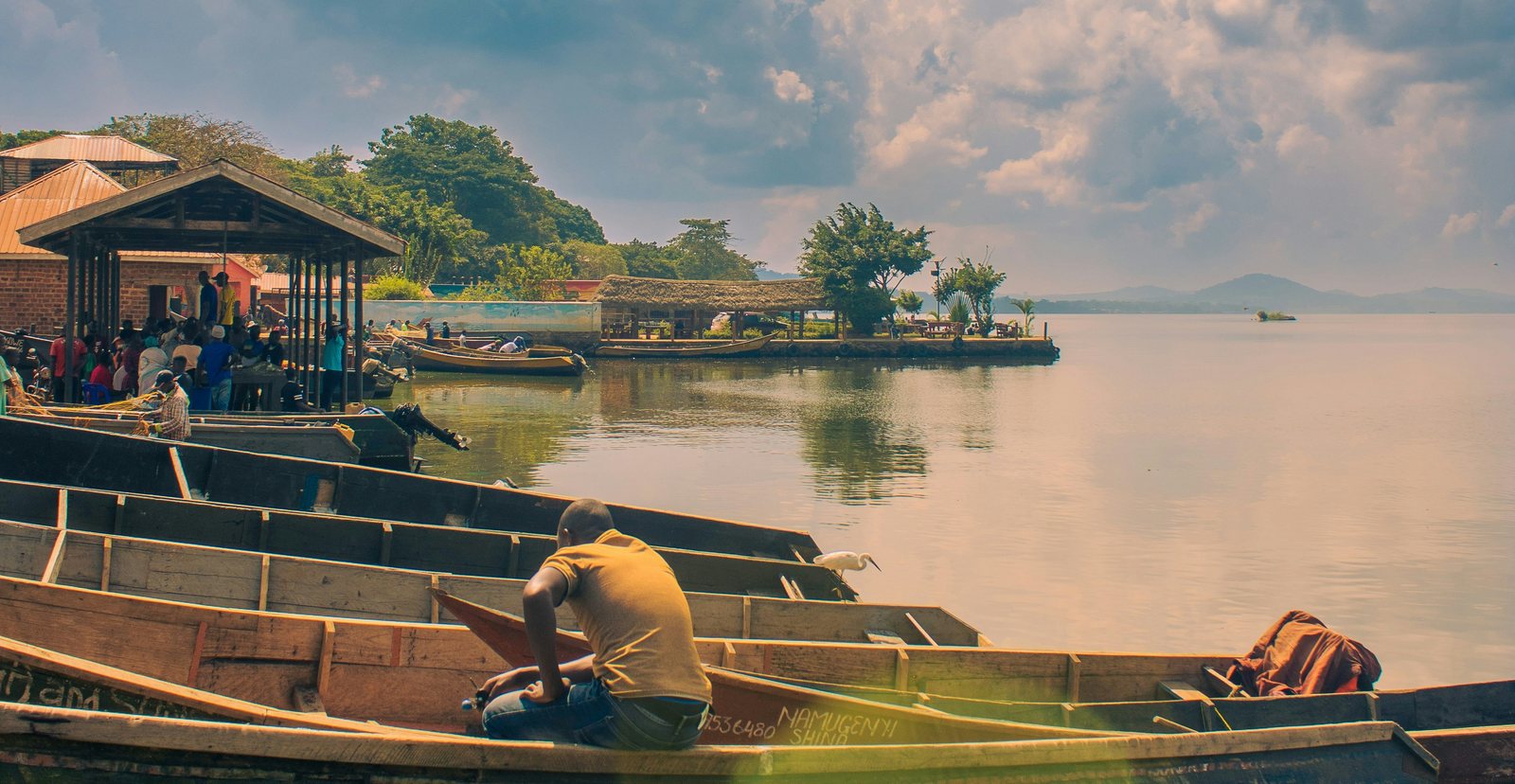
A Lake Victoria landing site at Busabala, near Kampala. Photo: Mpagi Philemon / Unsplash
How to Use This Guide
A central challenge in the pursuit of sustainability is how to integrate the general knowledge of core principles with the specific knowledge of local contexts to provide useful guidance for action on the ground. This research guide provides a foundation for applying the concepts and frameworks of the course to a concrete case: the East African nation of Uganda. As you progress through the course, you can return to this case to apply new concepts and frameworks:
- In Part 1 (Sustainable Development as a Conceptual Challenge), you can use this guide to assess Uganda’s goals for sustainable development, the state of its resources, and the well-being of its people (Sections 1–4 below);
- In Part 2 (The Anthropocene as a Complex Adaptive System), you can analyze the complex dynamics of Uganda’s nature-society system (Section 5);
- In Part 3 (Capacities Needed for the Pursuit of Sustainability), you can evaluate Uganda’s capacities for pursuing sustainability (Section 6).
It is critical to understand that this guide is only a springboard for your own inquiry into Uganda. Your job is to become well-versed in Uganda and its potential to effectively pursue sustainability. That requires critically reading this document and the linked citations, delving deeper into the available literature on Uganda, and exploring the broader literature in sustainability science and related fields. In the age of artificial intelligence, assembling and summarizing what has already been written about a place has never been easier. What remains scarce is different: new knowledge about Uganda itself (your interviews will generate a little of it), and the ability to put the many parts together—goals, resources, well-being, system dynamics, capacities—into useful guidance for actual progress toward sustainability. That work of integration is what this case asks you to practice. Many of the mistakes that actors make in designing interventions to meet sustainable development goals involve a failure to fully grasp the complexity of the nature-society system in which they hope to intervene. You should be prepared to defend your chosen supporting evidence; this means conducting thorough, thoughtful research and analysis and using credible, well-chosen sources.
This guide is structured as follows:
- A brief introduction to the Uganda case, including how actors in the region have framed their own sustainability goals.
- A look at the historical context that sets the stage for the modern-day pursuit of sustainability in the region.
- A descriptive overview of the state of human well-being in Uganda today.
- A brief exploration of the resource base—natural and anthropogenic—in Uganda today.
- Some links to interesting examples of complex nature-society system linkages in Uganda, to give you a feel for the complexities of the region.
- Questions to guide your assessment of Uganda’s capacities for pursuing sustainability.
- A note on expert interviews, with a pointer to the course Interview Guide.
1. The Uganda Case: Context and Goals
This case involves the interactions of society and environment in the semi-humid tropical region contiguous with modern-day Uganda. Modern-day Uganda, located in East Africa, is a young country. It was formed in 1962, after the country gained its independence from Britain. Today, Uganda is a country of roughly 50 million people (UN estimate for the mid-2020s) on a land area closer in size to the U.S. state of Oregon (population 4 million). Even the headline number is uncertain: Uganda’s own 2024 national census counted 45.9 million people, about four million fewer than the UN’s model-based estimate for the same year—a first lesson in how hard it is to measure even the most basic facts about a rapidly changing country. The Ugandan population is notably young: the 2024 census found half of all Ugandans under 18 years of age, with a median age of about 17. The people of Uganda are on average very poor and rural, and most depend on farming and agriculture for survival. Industry contributes only a small share of the economy—mainly value-added processing of tea, tobacco, sugar, coffee, cotton, grains, dairy, and edible oils—though foreign direct investment has grown since political stability returned in the 1990s, bringing textile and steel mills, a car assembly plant, a tannery, and cement factories.
But Uganda aspires to lift its people out of poverty. To do this, the country has a national vision for 2040, which aims for “A transformed Ugandan society from a peasant to a modern and prosperous country within 30 years.” Achieving this goal will not be easy. Despite improvements since the 1990s, poverty remains a major challenge facing the country.
Uganda’s Fourth National Development Plan 2025/26–2029/30 (NDPIV)—the successor to NDPIII, which ran through FY2024/25—states its goal as “Higher household incomes, full monetisation of the economy and employment for sustainable socio-economic transformation.” The plan organizes public investment into 18 priority programs, and is framed as the first of three five-year plans delivering the government’s “tenfold growth strategy”: expanding the economy from roughly USD 50 billion (FY2023/24) to USD 500 billion by 2040, anchored on agro-industrialization, tourism, minerals-based industrial development (including oil and gas), and science, technology and innovation. The government hopes to accelerate average annual GDP growth from recent levels of 5–6.8% to double digits by the end of the plan period; the World Bank projects growth spiking above 10% in FY2026/27 as oil production begins, before settling back toward 6%. Whether these targets are realistic, and what pursuing them would mean for Uganda’s people and environment, is for you to assess.
Uganda Vision 2040 highlights that achieving the primary goal of a transformed Ugandan society from primarily rural and poor to modern and prosperous will require: strengthening the country’s infrastructure (energy, transport, water, oil and gas, and information and communication technology (ICT)); improving the country’s Science, Technology, Engineering and Innovation (STEI) capacity; improving land use and management; improving the country’s urbanization strategy; strengthening human resources; and promoting peace, security and defense.
Citations:
- Government of Uganda. 2013. “Uganda Vision 2040.” National Planning Authority.
- Government of Uganda. 2025. “Fourth National Development Plan (NDPIV) 2025/26–2029/30.” National Planning Authority.
- World Bank. GDP growth (annual %) – Uganda.
- World Bank. The World Bank in Uganda: Overview.
2. Historical Context
Uganda has been settled by human beings for 100,000 years and has long encompassed a wide range of languages and cultures. The region’s landscape and climate—particularly its reliable rainfall and fertile grasslands—made it attractive to herders and farmers. Early human settlers appear to have been Bantu-speaking peoples, who spread across southern Africa. Between the 13th and 16th centuries, the area moved from a clan system to a series of kingdoms. Buganda, the largest kingdom, came to dominate the region, and engaged in a complex system of trade with Swahili and Arab traders, increasing in influence and wealth as the centuries progressed.
In the 19th century, European traders arrived in the region, seeking ivory and slaves. From the 1840s onward, religious missionaries from a range of faiths entered the region, converting many to Christianity and Islam. These conversions represented a significant cultural and political shift within the country. The rulers of Buganda often used religious divisions to manipulate various factions within the region, and in turn these groups struggled for political influence. Converted Bugandans also represented a new class within the region and were often educated and proponents of government reform. In the 1880s, matters came to a head when King Mwanga II executed 45 Christian converts. The story of the “Uganda Martyrs,” as they soon came to be termed, was disseminated widely, particularly in Great Britain, where it was used to argue for annexation of the region.
The 1880s also saw the “Scramble for Africa,” in which European powers, particularly Britain, France, and Germany, contended with each other to annex African territories, both as an assertion of power and for their commercial possibilities. Britain and Germany in particular engaged in extended wrangling over the rights to East Africa, including Buganda. In 1888, political parties based on Catholicism, Protestantism, and Islam, backed by the British, united to overthrow the Bugandan king. Mwanga, however, ultimately outmaneuvered this attempt by offering to hand over control of trade within Buganda to the British East Africa Company (later known as the Imperial British East Africa Company, IBEAC) in exchange for reinstatement. Thus, in 1888, the area came under the official control of the IBEAC. Further, the factions who had once united in revolution began to struggle amongst themselves, and conflicts arose both between Muslim and Christian groups, and between Catholic and Protestant. These conflicts would result in divisions that would reverberate well into the 20th century.
In 1894, the region became a British protectorate. This occurred during the heyday of British Imperialism: during the decades between the 1870s and 1900s, when Britain expanded to cover nearly 13 million square miles, or a quarter of the globe’s land surface. Likewise, a quarter of the world’s human population came under British rule. Under Great Britain, the borders of Buganda were expanded to the same approximate area Uganda occupies today. Mwanga, who had initially approved the region becoming a protectorate, later came to regret this, and launched a series of unsuccessful attempts to dislodge the British from Uganda, but ultimately died in exile.
Shortly thereafter, Britain began planning the Uganda Railway, which was to stretch from Mombasa, through Nairobi, and end at Kisumu, located on the eastern shore of Lake Victoria. The purpose of the railway was to make the seemingly unprofitable territory (often referred to as a “wasteland” by government detractors) into a useful component of the British Empire. This sort of landscape improvement was a central tenet of Imperialism. To construct the railroad, the British government brought over 7,000 workers from India—mostly Sikhs from Punjab—as labor. The railroad also employed Kenyans and Ugandans, but at much reduced wages. The conditions for laborers were harsh: the landscape was arid and inhospitable, diseases were rampant, and wildlife dangerous (including the famous “Tsavo Maneaters,” lions rumored to have killed hundreds of workers). Many workers died or deserted. Despite this, the railroad reached Kisumu in 1903, and the “Lunatic Line” was complete.
The railroad ushered in a new period for Uganda, allowing for the import and export of goods, and encouraging British settlers to move into the area, particularly the fertile Ugandan highlands. However, during the same period, several factors reduced the populations of native peoples in Uganda and East Africa as a whole. Rinderpest, a cattle disease, was introduced from central Asia in 1887 and rapidly spread across the area, killing up to 90 percent of African cattle. This left the pastoral peoples who relied upon them without livestock for food or income, or plow animals to maintain fields. This, coupled with introduced human diseases, and a widespread period of drought, led to the deaths of hundreds of thousands, in what historian Mike Davis has bluntly referred to as “Late Victorian Holocausts.” Further, the decimation of cattle meant that the landscape reverted to bush, an ideal breeding ground for tsetse flies. Tsetse flies are carriers of parasitic unicellular organisms that cause sleeping sickness in humans and trypanosomiasis in animals (mostly domestic). By 1920, the spread of the tsetse fly into new areas, and the resultant transmission of sleeping sickness, had killed millions of Africans. This effectively resulted in the landscape that British settlers encountered, and which we still associate with Africa today: wild, populated by megafauna, and devoid of people.
In the decades that followed, Britain focused on making Uganda profitable, particularly through raising cash crops, often cotton. The resource demands of WWI and WWII were a boon for Uganda, as were rebounding human populations. However, as the decades progressed, Ugandans chafed at British rule, particularly their regulation of agricultural prices. In 1949, this tension erupted into riots in which Ugandans protested agricultural restrictions and their lack of political representation. Britain, which was in the post-war process of divesting itself of many of its Imperial acquisitions, acceded, and began the process of preparing the country for independence.
In the lead up to independence, Uganda saw a proliferation of political parties, as various groups within the soon-to-be-nation presented different visions of what the new Uganda should look like. In 1962, Uganda received independence from Britain as a commonwealth, and held its first elections. The years that followed were dominated by many of the fractures that had long existed within the country. From 1962 to 1967, there was a protracted power struggle between Uganda’s central government and the still-existing kingdom of Buganda, which wished to maintain the privileges it had enjoyed under British rule. Ultimately, in 1967, Uganda abolished all kingdoms within the country, and declared itself a republic. In 1971, General Idi Amin seized power through a military coup, and remained dictator for eight years. Amin ruled through violence, carrying out mass killings to cement his power; estimates range from 100,000 to 500,000 killed. His regime was ultimately toppled by the Uganda-Tanzania War.
Post-Amin, Uganda once again erupted into conflict, this time between the forces of the National Resistance Army and the newly-elected President Obote. The NRA, led by Yoweri Museveni, alleged that Obote had won the election through fraud, and refused to accept his authority. Ultimately, in 1986, Museveni triumphed, and has remained president ever since. Under this authority, political parties in the country were suspended until 2005, when a referendum was passed that allowed parties to operate freely. That same year, however, a measure was passed abolishing presidential term limits, and in 2017–2018 a further constitutional amendment removed the presidential age limit of 75. Museveni has subsequently won reelection in 2011, 2016, 2021, and January 2026—the last giving him a seventh elected term and extending his rule past four decades—despite widespread allegations, both within the country and without, of election fraud. The 2026 election was accompanied by a nationwide mobile internet shutdown, the continued detention of opposition figures, and reports from international observers of intimidation and violence; the leading opposition candidate, Robert Kyagulanyi (better known as the musician Bobi Wine), officially received about a quarter of the vote and rejected the result as a sham.
Citations:
- Reid, R. 2017. A History of Modern Uganda. Cambridge: Cambridge University Press.
- Kasozi, A.B.K. 1994. The Social Origins of Violence in Uganda, 1964–1985. Montréal: McGill-Queen’s University Press.
- BBC. January 16, 2021. “Uganda election: Yoweri Museveni declared winner amid rigging claims.”
- Al Jazeera. January 17, 2026. “Uganda’s President Yoweri Museveni wins seventh term.”
- Human Rights Watch. January 28, 2026. “Uganda: Post-Election Assault on Political Opposition.”
3. Human Well-Being in Uganda
The indicators examined in this section capture the constituents of well-being—the dimensions people actually experience as quality of life, such as health, education, income, and living conditions. As you explore in Unit 1.2 of the course, these differ from the determinants of well-being—the resources examined in Section 4—that enable societies to produce well-being outcomes. In other words, constituents are the ends we seek (what people actually experience), while determinants are the means (the resources societies draw upon to achieve those ends).
Uganda as a country made substantial gains in economic growth and poverty reduction from the 1990s through the early 2010s. Writing in 2012, the World Bank judged that “Uganda had one of the best poverty reduction performances in the world since 1992, a result of a subtle structural transformation of household livelihood portfolios, rooted in strong growth in private wage and salary employment and non-farm household enterprises, and increased agriculture productivity among agriculture households” (World Bank, 2012). The Bank’s 2022 Uganda Poverty Assessment, however, found that poverty reduction had largely stalled since the early 2010s, with households highly vulnerable to being knocked back into poverty by droughts, health shocks, and price swings. Measured against Uganda’s national poverty line, the most recent national household survey (2023/24) reports poverty falling to about 16%—but with enormous regional disparities: in the Karamoja sub-region, roughly three-quarters of the population remains poor. Uneven growth in the country’s economy has led to widespread inequality both between rural and urban settings and even within rural settings. Especially in the North and East portions of the country, poverty reduction has lagged, while the center of the country has performed significantly better in terms of poverty reduction and economic growth.
There are many factors that contribute to human well-being. For instance, the OECD’s Better Life Initiative has identified 11 topical areas as particularly important to human well-being, including factors like housing, income, safety and environment. The SDGs identify 17 sustainable development goals, many of which are factors that contribute to human well-being. This section looks at multiple indicators to help us understand the current state of and trends in human well-being in Uganda. Because of its relative ubiquity, we start with GDP per capita. We then move on to other important indicators of well-being including the Human Development Index (HDI); subjective well-being data; performance against the SDGs; and health and education indicators. Finally, we look at the Gini measure of inequality. Please remember that this is by no means a comprehensive list of the data available on well-being in Uganda, and you should delve deeper into this topic.
The relative position of Uganda with respect to other nations on a host of well-being indicators remains very low. On the most common metric used to capture the well-being of a country, GDP per capita, Uganda clocks in at about $1,073 (2024, current US$)—up roughly a third from the $794 of the late 2010s, but still in roughly the poorest sixth of countries globally. A slightly more comprehensive metric for well-being, the Human Development Index (HDI), which is a composite statistic that captures life expectancy, education and income per capita, puts Uganda at 0.582, ranked 157 out of 193 countries (2025 Human Development Report, data for 2023)—a value that has now crossed into the UN’s “medium human development” category. Data on subjective human well-being ranks Uganda 116 out of 147 countries surveyed (World Happiness Report 2025; see the citation below to understand how this data is gathered and the strengths and weaknesses of the survey questions). Uganda is also performing relatively poorly compared to other nations against the UN’s sustainable development goals, ranking 142 out of 167 countries (Sustainable Development Report 2025; see the SDG citation below to see how Uganda is performing on specific SDG goals).
Life expectancy in Uganda has increased measurably since 1990, but it is still low when viewed from a global perspective. In 1990 life expectancy at birth was 45.9 years. By 2018, this number had increased to 63.0 years, and by 2023 to about 68 years—an increase of more than 20 years since 1990, driven substantially by progress against HIV/AIDS (see below). Even so, Uganda still ranks in roughly the bottom quarter of countries on life expectancy at birth. Education indicators have also improved since the 1990s. In 1990, the mean years of schooling in Uganda was 2.8. By 2023, this number had risen to 6.3.
While modest compared to global averages, health outcomes are improving in Uganda. The under-five mortality rate declined from 179 (per 1,000 live births) in 1990 to 66 in 2013, and to 52 by the 2022 Demographic and Health Survey. The maternal mortality ratio (per 100,000 live births) declined from 780 in 1990 to 360 in 2013, and to 189 by 2022. Deaths from HIV/AIDS—for years the number one cause of death in Uganda—have fallen by roughly two-thirds since 2010, to about 17,000 in 2022, as antiretroviral treatment reached more than a million Ugandans. HIV/AIDS is no longer the country’s leading cause of death; malaria and other infectious diseases remain major causes of death (Uganda still records roughly 13 million malaria cases a year), while non-communicable diseases are a rapidly growing share of the disease burden. Inequality also impacts health outcomes: wide within-country disparities in childhood nutrition are closely linked with household income.
Since 1997, Uganda has had free universal primary education. This program led to a huge increase in the number of grade 1 students enrolled in school. In a single year, grade 1 enrollment rose from 700,000 in 1996 to 2.02 million in 1997. Unfortunately, despite high grade 1 enrollment, Uganda has faced challenges with attrition. For example, the 1998 grade 2 enrollment was only 1.4 million. After grade 2, school attrition continues, with a sharp drop-off between 6th and 7th grade, likely due to failure of many students to complete the required exams at the end of 6th grade. There are also inequalities in access to education along both household wealth and gender dimensions. Studies from the 2000s found that while roughly 40% of children from the richest 20% of households in Uganda were likely to reach grade 9, less than 10% of children from the poorest 40% of households would do so, with the drop-off in schooling far greater for the poorest female students than for the poorest male students. (These attrition and inequality figures are now dated; the UNESCO WIDE inequality database and the 2022 Demographic and Health Survey are good places to check how they have evolved.)
Compared to global figures, Uganda’s Gini coefficient (a common metric for inequality) is in the middle of the pack at about 43% (low inequality translates to Gini coefficients closer to 0% and higher inequality translates to Gini coefficients closer to 100%). Globally, Gini coefficients range from around 63% on the high end (South Africa) to the mid-20s on the low end (several central European countries). For context, the United States’ Gini coefficient is about 42% and France’s is about 32%. Within Uganda, the Gini coefficient rose from 37% in 1992 to 43% by 2009 and has remained roughly at that level in the most recent surveys (42.7% in 2019), though there are preliminary indications from the 2023/24 household survey that inequality may be narrowing. There are also differences between rural and urban areas in terms of inequality. Urban areas on average are more unequal than rural areas (where almost everyone is poor), but inequality has been rising in urban and rural areas alike. (Note: sometimes you will see Gini coefficients expressed on a scale from 0 to 1, instead of 1 to 100. These are just different ways of expressing the same idea.)
Citations:
- World Bank. 2022. Uganda Poverty Assessment: Strengthening Resilience to Accelerate Poverty Reduction. (The 2012 working paper quoted above, “Poverty Trends in Uganda: Who gained and who was left behind?”, WP 69519, is no longer available online.)
- UNDP. 2025. Human Development Report data center: Uganda country profile.
- Sachs, J. et al. 2025. Sustainable Development Report: Uganda country profile.
- Helliwell, J. et al. 2025. World Happiness Report.
- Uganda Bureau of Statistics (UBOS) and ICF. 2023. Uganda Demographic and Health Survey 2022.
- World Health Organization. Uganda country data.
4. The Productive Base: Resources in Uganda
The ultimate determinants of Uganda’s ability to achieve its sustainability goals are its stocks of resources—the “fuel in the tank” on which each generation can draw to generate the flow of goods and services it consumes in pursuit of well-being. As in the course, we divide these resource stocks into two groups: those provided by nature (natural resources, Unit 1.3) and those provided by people (anthropogenic resources, Unit 1.4). Together they constitute the necessary—but, as we will learn, insufficient—ingredients for improving human well-being. (Terminology note: much of the literature follows the economists in referring to “capital” and “assets” rather than to “resources.” The more general term we have come to prefer is “resources”—but in the context of sustainability analysis, all of these terms can be taken to mean the same thing.)
Working definitions of the resource stocks:
- Natural resources: the foundations (land and water); materials (hydrocarbons, metals, and other minerals); and life (biomass and biodiversity)—together with the ecosystems, climate, and biogeochemical cycles in which they are embedded.
- Anthropogenic resources, conventionally grouped as:
- Human capital: people—their health, education, and numbers—as a means (rather than an end) of sustainable development;
- Manufactured capital (also called “produced capital”): human-made systems of roads, buildings, ports, machinery, telecom hardware, pharmaceuticals and personal “stuff”;
- Social capital: trust, norms, and institutions—often more difficult to measure than stocks of natural resources or manufactured capital in a region (not that those don’t present their own challenges);
- Knowledge capital: understanding of how the world is that is codified in books, journals and patents, as well as experiential and indigenous knowledge that is widely shared among people, whether written down or passed on orally. Methods of measuring knowledge capital remain difficult, but there are efforts out there to try to quantify this stock.
In order to understand how these resource stocks generate human well-being in Uganda, you must begin by understanding the current state of each resource in the region (i.e. how much of a given resource is there). In addition, it is important both to understand the historical trends and to gauge the trends moving forward (i.e., human capital is increasing and will likely continue to increase because early childhood nutrition has improved and rates of infant mortality have declined). Understanding how these resource stocks generate (or fail to generate) human well-being also requires examining the consumption-production system through which people harness resources to meet their needs, with attention to the actors (individuals, communities, firms, government) who control and manage resources, the institutions (rules, norms, culture) that shape how resources can be used, and the power relationships that determine whose interests prevail—themes you will develop in Part 2 of the course.
Here, we provide a brief narrative overview and a few links to research to orient you to the state of and trend in each of the resource stocks in the region. Remember that this is just a sample of the available data and research.
4.1 Natural Resources
Uganda has abundant natural resources including lakes and rivers, forests, abundant biodiversity, and deposits of copper, tungsten, cobalt, gold, phosphate, iron and limestone. In addition, significant quantities of petroleum were discovered in the Lake Albert rift basin in 2008; after nearly two decades of preparation and controversy, commercial production is expected to begin around the end of 2026 (see Section 5). However, many of these natural resource stocks are declining. Uganda ranks 154 out of 180 countries on Yale University’s Environmental Performance Index (2024), which is a composite ranking of multiple indicators including forests, biodiversity and habitat, water and sanitation. (It is worth your time to visit this website—cited below—to explore this data further.) Uganda is doing especially poorly on air quality, wastewater treatment, and solid waste management.
As a predominantly rural country, natural resources are critical to the daily livelihoods of the majority of Ugandans. One significant challenge facing Uganda is the decline in forest coverage. Forest area in the country has declined significantly since the 1990s. In 1990, forested area covered more than 45,000 km², but by 2012, forested area had dropped closer to 25,000 km², and by 2025 to roughly 23,700 km²—about 12% of the country’s land area. The annual rate of forest loss has slowed, however—from about 2.7% per year in the 1990s to under 1% per year in the early 2020s—and planted forest area has roughly tripled since 1990, though planted forests are not ecological substitutes for the natural forest that continues to be lost. The decline in forested area is due to clearing for agriculture and use of forest products (wood) for household cooking: the 2024 census found that about two-thirds of households still cook primarily with firewood, and most of the rest with charcoal. Lack of fuel for cooking and home use has the potential to negatively impact human well-being in rural areas; however, the magnitude of this impact is complex because using wood for indoor cook stoves has negative impacts on human health.
Climate change is already having, and will continue to have, significant impacts on Uganda. In the agriculture sector, for example, increased droughts are hampering farm yields. An assessment by the Ministry of Water and Environment in 2015 estimated that climate change could cost the country annually between 3.2 and 5.9 billion dollars (USD) within a decade, with the largest impacts in the water, energy, agriculture and infrastructure sectors. The World Bank’s first Country Climate and Development Report for Uganda (2025) updates this picture: without adaptation, climate change could cut GDP by around 3% by 2050, push more than 600,000 additional people into poverty, and drive as many as 12 million Ugandans to migrate internally. Uganda’s poorest people are the most likely to be damaged by climate change, as both their livelihoods and what few assets they hold are closely tied to natural resources.
Citations:
- Environmental Performance Index. 2024. “Uganda: Country Profile.” Yale University.
- Jagger, P. & Kittner, N. 2017. “Deforestation and biomass fuel dynamics in Uganda.” Biomass and Bioenergy 105:1–9.
- FAO. 2025. Global Forest Resources Assessment. (Uganda country data.)
- Ministry of Water and Environment, Republic of Uganda. 2015. “Economic Assessment of Impacts of Climate Change in Uganda.”
- World Bank. 2025. Uganda Country Climate and Development Report.
- McDonnell, T. 2017. “Here’s What Climate Change Looks Like to Uganda’s Coffee Farmers.” National Public Radio.
- For your research, you may want to explore additional data on natural resources at the UNEP World Environment Situation Room. (The older UNEP “Environmental Data Explorer” cited in earlier versions of this guide has been retired.)
Sections 4.2 through 4.5 turn to Uganda’s anthropogenic resources (Unit 1.4): human, manufactured, social, and knowledge capital.
4.2 Human Capital: Population, health and education
The current population of Uganda is roughly 50 million by UN estimates (the 2024 national census counted 45.9 million—see Section 1), growing at about 2.9% annually. This growth rate has fallen substantially from the 3.6% of a decade ago, but remains among the highest in the world—higher than Kenya (about 2.0%) and comparable to Ethiopia (about 2.5%). Average life expectancy is about 68 years and improving; life expectancy at birth increased by roughly 12 years between 2000 and 2012 alone, driven substantially by the rollback of HIV/AIDS. This increase in life expectancy combined with continued high birth rates has led to the high rate of growth in Uganda’s population, and means that Uganda is a young country, with half of its population under 18 years of age. Birth rates, however, are declining—and faster than demographers long expected. In the 1970s, total fertility rates (TFR) were around 7.1 births per woman. By 2010, this number had decreased to 6.5 births per woman; the 2022 Demographic and Health Survey measured 5.2, and UN estimates for the mid-2020s put the figure lower still. There are inequalities in birth rates that track economic inequities: in the mid-2000s, women in the poorest quintile (mainly rural) averaged 8 children over their lives while women in the wealthiest quintile averaged just over four; that gap has narrowed as overall fertility has fallen, and the 2022 Demographic and Health Survey is the place to check its current size. Despite declining birth rates, Uganda’s population is expected to reach roughly 85 million by 2050 (UN World Population Prospects 2024, medium variant). Note that this projection stood at 105 million as recently as the late 2010s; projections change quickly as fertility declines outpace expectations, so check the date on any projection you cite.
Health trends are covered in Section 3: substantial improvement in child and maternal mortality and a dramatic turnaround on HIV/AIDS, with malaria still a major killer, significant remaining challenges in health inequality, and non-communicable diseases a growing share of the burden.
Education trends are also covered in Section 3: universal primary education has achieved notable enrollment increases but faces major attrition and inequality challenges.
Citations:
- United Nations Population Fund. World Population Dashboard: Uganda.
- United Nations. 2024. World Population Prospects (2024 Revision).
- Uganda Bureau of Statistics. 2024. National Population and Housing Census 2024.
- Population Reference Bureau. 2011. “The World at 7 Billion.” Population Bulletin 66(2).
- World Health Organization. Uganda country data.
- Ssewanyana, S. & Kasirye, I. 2012. “Causes of Health Inequalities in Uganda: Evidence from the Demographic and Health Surveys.” African Development Review 24(4):327–341.
- Lewin, K. 2009. “Access to Education in sub-Saharan Africa: patterns, problems and possibilities.” Comparative Education 45(2):151–174.
4.3 Manufactured Capital: Energy, roads, and irrigation
Much of Uganda’s electric power supply is created through a mix of manufactured capital in the form of dams and hydroelectric power stations and natural resources in the form of rivers. For decades the majority of electric power came from two locations—the Nalubaale and Kiira hydroelectric stations on the Victoria Nile—but the last decade has seen a major buildout: the Isimba dam (183 MW) came online in 2019 and the Chinese-financed Karuma dam (600 MW), Uganda’s largest, was commissioned in 2024. Total installed generation capacity now stands at roughly 2,000 MW, more than double the 850 MW of the mid-2010s (though the entire country’s capacity remains smaller than that of a single large American city). Access has improved even more dramatically: as recently as the mid-2010s only about 15% of Ugandans—and 7% of rural residents—had access to electricity; by 2023 just over half the population had access (counting both grid and off-grid solar connections), though rural access still lags far behind and most rural households remain unconnected. This is one of the most significant recent changes in Uganda’s productive base. Even so, firewood and charcoal (natural resources) still provide the overwhelming majority of household energy, especially for cooking (see Section 4.1).
Uganda remains lacking in another aspect of manufactured capital that likely has a significant impact on overall well-being in the country: roads. Gollin & Rogerson (2010) report that in 2003, Uganda had a network of paved roads covering 16,300 km in a total land area of roughly 200,000 km², and calculate that this is not much greater than the paved road density found in Britain in 350 CE, meaning that in terms of roads as manufactured capital, “Uganda lags Britain by almost two thousand years.” (A caution: the “paved” figure Gollin & Rogerson cite almost certainly describes Uganda’s main-road network rather than tarmacked roads, which were and remain a far smaller share. The comparison with Britain still holds.)
The lack of roads in Uganda has important impacts on well-being. In many remote regions of Uganda, the only viable means of transportation is by foot. Ugandans are forced to walk long distances to markets as well as other services. The average distance a Ugandan citizen lives from a health clinic (including urban areas) is 7 km, and 77% of people report walking to clinics. The lack of roads also makes it harder for farmers to access markets to sell their produce and to purchase inputs. Gollin & Rogerson (2010) studied the impact of roads on agriculture and economic growth in Uganda. They found that improvements in transportation have important (though complex) interactions with improvements in agriculture productivity. Roads also allow for the reallocation of labor out of agriculture to other industries.
Despite significant water resources, most Ugandan agriculture is rain-fed, due to limited access to surface or groundwater based irrigation infrastructure. Of an estimated irrigation potential of some 567,000 hectares, well under 3% has been developed, and fewer than 1% of agricultural households irrigate. The limited use of irrigation in Uganda’s farming practices limits crop productivity. The potential of increased irrigation infrastructure to increase the productivity of Ugandan agriculture has led the government to put significant emphasis on irrigation—including a National Irrigation Policy (2018) and a micro-scale irrigation subsidy program—in its agriculture plans.
Citations:
- Energypedia. “Uganda Energy Situation.”
- World Bank. Access to electricity (% of population) – Uganda.
- Gollin, D. & Rogerson, R. 2010. “Agriculture, Roads and Economic Development in Uganda.” NBER Working Paper 15863.
- Mwaura, F. & Katunze, M. 2014. “Enhancing agricultural production and productivity in Uganda through irrigation.” Economic Policy Research Centre, Uganda, Policy Brief No. 49.
- Ministry of Water and Environment, Republic of Uganda. 2018. “National Irrigation Policy.”
4.4 Social Capital: Trust, norms, institutions
The legal system in the Republic of Uganda is based on English common law and the 1995 constitution. The President is the Head of State and is elected by universal suffrage for five-year terms. The current president, Yoweri Museveni, has been president since January 1986 and was reelected to a seventh term in January 2026 with an official 71.65% of the vote. But Museveni’s opposition rejected the result, and international observers criticized the election for violence, a nationwide internet shutdown, lack of transparency, and harassment of political actors and civil society, including the continued detention of opposition figures (see Section 2).
In a survey by Transparency International (2015), 69% of respondents in Uganda felt their government was performing badly on fighting corruption within the government. Uganda also has bribery rates that are far higher than the regional average: in the most recent Afrobarometer survey (2026), 74% of Ugandans who sought police assistance reported paying a bribe, as did 51% of those seeking identity documents and 41% of those seeking medical treatment—rates that have risen significantly since 2017. Overall, Uganda scores a dismal 25 out of 100 on Transparency International’s Corruption Perceptions Index (2025), ranking 148th in the world.
Research into elite corruption in Uganda has found that corruption is an “essential means of consolidating the present government in power” (Tangri & Mwenda, 2006). Therefore, formal anti-corruption institutions are often usurped by the political elite whenever they threaten to expose their corruption. At the same time, international donors have been unwilling to criticize corrupt practices on the part of Uganda’s elite, as they see the “quasi-authoritarian” regime of the Museveni government as one of their most effective regional partners in carrying out donor-sponsored economic reform. (Whether donors’ tolerance is shifting—amid aid cuts, election criticism, and anti-LGBTQ legislation—is an open question.)
Research has found that an important component of social capital includes both trust and social networks. At the local level, research looking at the dynamics of social capital in Uganda has shown that social capital (defined in terms of membership in local agrarian associations such as farmer cooperatives) positively affects household income and therefore reduces poverty (Hassan & Birungi, 2011). Moreover, they find that the impact of social capital on household welfare compares well with other forms of capital such as human capital measured in terms of education. There is however limited data to help us understand whether this aspect of social capital (trust and networks) is increasing or decreasing in Uganda (let alone the total stock). We hope that your research may uncover more data and insights here.
A more negative outcome related to social capital at the local level are weak formal institutions protecting the land tenure rights of the poor. Analysis by the International Institute for Environment and Development (IIED) has found that powerful actors (the wealthy) in rural areas often override formal laws, ignoring legal constraints and usurping land from their poorer neighbors—ignoring both customary land tenure arrangements as well as national laws. Many of Uganda’s poorest rural citizens face severe land access challenges including very high cost to process land tenure certificates or titles, difficulties in securing compensation for their land when sold/stolen, and poor protection from illegal evictions.
Citations:
- Transparency International. 2015. “People and Corruption: Africa Survey 2015.”
- Transparency International. Corruption Perceptions Index: Uganda.
- Afrobarometer. 2026. “Ugandans identify basic services as priorities for government intervention, report high levels of bribery.” Dispatch No. 1204.
- Tangri, R. & Mwenda, A. 2006. “Politics, donors and the ineffectiveness of anti-corruption institutions in Uganda.” Journal of Modern African Studies 44(1):101–124.
- Hassan, R. & Birungi, P. 2011. “Social capital and poverty in Uganda.” Development Southern Africa 28(1):19–37.
- Tumushabe, G. & Tatwangire, A. 2017. “Understanding changing land access issues for the rural poor in Uganda.” International Institute for Environment and Development.
4.5 Knowledge Capital: Research, innovation
An overview of challenges for higher education in Africa in the 21st century found that African higher education faces the dual challenge of increasingly high demand for access to higher education, and low capacity and funding in the sector (Teferra and Altbach, 2004). At the same time, higher education is recognized as a key force in the development of African countries, which require local capacity to participate in national, regional and global knowledge and innovation systems. As of 2004, the entire continent of Africa (with 54 countries) had no more than 300 schools which fit the definition of a university, making Africa the least developed region in terms of higher education capacity. (Higher education across Africa has expanded considerably since then—another set of figures worth updating in your research.)
Uganda has performed relatively well in the country’s support of universities and research capacity. Uganda has focused both on expanding the number of public universities, and also on creating private universities (where students pay their own way) in order to meet student demand. Yet university and tertiary education enrollment remains low with respect to global standards. The tertiary gross enrollment ratio in Uganda in 2000 was only 3%; by the mid-2010s it had risen to about 5%, still well below the sub-Saharan African average (now roughly 9–10%) and dramatically below the figures above 70% for Europe and Central Asia. (The ‘Gross Enrolment Ratio’ is calculated as total enrollment in a specific level of education as a percentage of the population in the official age group corresponding to that level.)
Access to universities is extremely unequal in Uganda. In 2004, students from the highest income group (making up less than 1% of Uganda’s population) took 42% of the available places at Uganda’s best university, Makerere University. Gender disparities, however, have shifted dramatically. In 1990, women constituted 27% of Makerere’s enrollment; by 2003, the percentage had increased to 34%; and by 2024, women made up about 53% of Makerere’s graduating class—outnumbering men, and prompting a new set of questions about why male enrollment is falling. (Whether the income-based inequality of access has improved as much as the gender gap is less clear.)
A second aspect of knowledge capital is the capacity for innovation (often referred to as R&D or research and development). Aggregate statistics on this form of knowledge capital in Uganda are difficult to come by. However, Uganda has invested significantly in its agriculture research capacity: inflation-adjusted public spending on agricultural R&D roughly tripled between 2000 and 2014, bringing Uganda close to the African Union’s target of investing 1% of agricultural GDP in research. There are some indications that this increased investment has resulted in significant new knowledge capital in the form of the invention of improved seed varieties, including genetically modified crops (GM crops or “GMOs”), specific to Ugandan agricultural systems. The politics of deploying that knowledge, however, remain unresolved: Uganda’s parliament passed a biosafety bill (the Genetic Engineering Regulatory Bill) in 2017 and again in 2018, but President Museveni has declined to sign it, and as of 2026 Uganda still has no operative law governing the commercialization of GM crops—a case of the gap between creating knowledge and linking it to action, to which we return in Section 6.
Citations:
- Teferra, D. & Altbach, P. 2004. “African Higher Education: Challenges for the 21st Century.” Higher Education 47:21–50.
- Liang, X. 2004. “Uganda Tertiary Education Sector Report.” The World Bank, African Human Development Working Paper Series 32807.
- Agricultural Science and Technology Indicators (ASTI). Uganda country page. IFPRI. (See also Flaherty et al. 2010, “Uganda: Recent Developments in Agricultural Research.”)
- Wafula, D. & Clark, N. 2005. “Science and Governance of Modern Biotechnology in Sub-Saharan Africa—The Case of Uganda.” Journal of International Development 17:679–694.
- Ongu, I. 2017. “Uganda’s Parliament to reconsider long-stalled ‘GMO bill’.” Alliance for Science. (For the current state of play, see Ntambi et al. 2025, “Uganda’s evolving national biosafety system,” Frontiers in Bioengineering and Biotechnology.)
5. Nature-Society System Dynamics: Examples and Sources
The biggest challenge to achieving sustainable development goals is not in measuring the indicators that tell us the current levels of well-being in a given region (even though this is not an easy undertaking), nor is it in accounting for the assets in the productive base of the region (though data remains limited on this as well). Instead, the most complicated challenge a practitioner of sustainability science or sustainable development faces is in understanding the complex nature-society system (in the literature you will also see the equivalent term “social-environmental system”) linking the productive base (the current state and trends of the region’s resource stocks) to the end goals of improved human well-being. Too many development projects fail because implementers fail to understand the on-the-ground realities and complexities that influence the multiple outcomes of any intervention. Serious reflection on what an intervention is intended to do, the obstacles it is likely to encounter, and the other effects it is likely to have is an essential step on the road to more effective, if humble, policy work.
Here we provide a few initial links that we found interesting, along with two examples, among many, of the nature-society interactions shaping Uganda.
Oil. Uganda’s Lake Albert oil fields (the Tilenga and Kingfisher projects) and the East African Crude Oil Pipeline (EACOP) to the Tanzanian coast are, as of 2026, nearing completion, with first commercial oil expected around the end of the year. The government has staked much of its tenfold growth strategy on oil revenues; projected GDP growth spikes above 10% as production begins. The projects have also faced a sustained international campaign over their human-rights, displacement, and climate implications; more than forty international banks and insurers declined to finance the pipeline, so the companies and the governments of Uganda and Tanzania largely financed it themselves. Who decides how the oil is developed, who benefits from its revenues, and who bears its risks are questions that will shape Uganda’s development for decades.
Refugees. Uganda hosts more refugees than any other country in Africa—over two million as of 2026, mostly from South Sudan and the Democratic Republic of the Congo—under one of the world’s most progressive refugee policies, which grants refugees land to farm and freedom to work and move. The policy has been celebrated internationally—though see the more skeptical assessment linked below—and is strained by chronic funding shortfalls, with major service cuts in 2026. In the settlements of northern Uganda, refugee families farm plots allocated from host-community land, aid flows shape local markets, and refugees and hosts share schools, clinics, and water sources.
Citations:
- Robinson, M. 2006. “The Political Economy of Governance Reforms in Uganda.” IDS Discussion Paper 386.
- World Bank. The World Bank in Uganda: Overview.
- Ministry of Agriculture, Animal Industry and Fisheries, Republic of Uganda. 2016. “Agriculture Sector Strategic Plan.” (Sector planning has since been folded into the Agro-Industrialisation Programme under NDPIII and now NDPIV—see Section 1.)
- Ellis, F. & Bahiigwa, G. 2003. “Livelihoods and Rural Poverty Reduction in Uganda.” World Development 31(6):997–1013.
- Hickey, S. 2005. “The Politics of Staying Poor: Exploring the Political Space for Poverty Reduction in Uganda.” World Development 33(6):995–1009.
- Oxfam. 2017. “Who is Growing? Ending Inequality in Uganda.”
- Sekitoleko, V. 2015. “Why your skills are best suited for agri-business.” TEDxNakaseroWomen.
- Pilling, D. June 8, 2017. “How the world’s biggest refugee settlement sprang up in Uganda.” Financial Times.
- Schiltz, J. & Titeca, K. 2017. “Is Uganda really a ‘refugee paradise’?” Al Jazeera.
- UNHCR. Uganda operational data portal. (Current refugee statistics, updated continuously.)
- EACOP. Project overview. For the critics’ case, see #StopEACOP and the Business & Human Rights Resource Centre’s EACOP coverage.
- TechnoServe. Uganda country page. (A reputable NGO that works in many countries, including Uganda, to “build competitive farms, businesses and industries.”)
6. Assessing Uganda’s Capacities for Pursuing Sustainability
Part 3 of the course examines the capacities a society needs in the pursuit of sustainability: to promote equity, to measure progress, to adapt to shocks and surprises, to govern cooperatively, to link knowledge with action, and to transform unsustainable pathways into sustainable ones (Units 3.1–3.7). This guide does not attempt that assessment of Uganda—that is your work. But the material above already raises the questions. Three examples:
- Uganda’s agricultural research system has produced improved crop varieties—including genetically modified varieties suited to Ugandan farming systems—that cannot legally be commercialized, because nearly a decade after parliament first passed a biosafety bill it remains unsigned (Section 4.5). What does this stalemate reveal about Uganda’s capacity to link knowledge with action, and what might unlock it?
- The World Bank’s 2022 poverty assessment concluded that poverty reduction in Uganda has stalled less because growth is slow than because households are so vulnerable to droughts, health shocks, and price swings (Section 3). What would build the capacity to adapt for the households that need it most?
- Oil revenues could finance the investments Vision 2040 imagines—or entrench the very pathways the plan aims to leave behind (Sections 1 and 5). Uganda’s capacities to govern cooperatively and to measure honestly what is happening will shape which it turns out to be. What would you look for, over the next decade, to tell the difference?
These questions—and the many others like them that the capacities lens will suggest—bear directly on your policy memo. Any intervention you propose will have to be carried out by real actors in Uganda, drawing on capacities that actually exist—or that your intervention itself would have to build.
7. Expert Interviews
Expert interviews are the centerpiece of the student cases. They are particularly effective tools for developing a sense of the complexities of your region, and interviews with local experts are especially important for ensuring your recommendations are nuanced and respectful of local context and history. Experts on Uganda can come from any sector—business, government, non-governmental organizations, academia, and journalism—and might include, for example, agricultural economists, energy and oil analysts, public health researchers, refugee-response practitioners, conservation scientists, and Ugandan journalists covering politics or land.
Plan to interview at least two experts as part of your research, and consider interviewing more. The course Interview Guide walks you through the full process—why interviews matter, how to identify the right people, how to reach out, and how to prepare for, conduct, and write up a good conversation—and a one-page checklist (PDF) is available to keep next to your laptop during the call. Remember: all experts have particular sets of expertise, and hence lenses through which they view the opportunities and challenges facing the pursuit of sustainability in the region. It is your job to make sense of the information you garner from expert interviews in the context of your wider research.
Conclusion
This research guide provides a foundation for understanding Uganda’s pursuit of sustainability. The challenge ahead is to build on it through your own research: to understand the complexities of the nature-society system, to evaluate how Uganda’s resources generate (or fail to generate) improved human well-being, to assess the capacities Uganda can draw on, and to develop nuanced, context-appropriate recommendations that account for Uganda’s unique history, current conditions, and future aspirations.
The pursuit of sustainability in Uganda—as anywhere—requires integrating general principles with specific local knowledge to provide useful guidance for action on the ground. This guide is your starting point for that integration.