Our Posterity: The Human Rights of Future Generations
This essay first appeared on July 4, 2026, in Self-Evident Truths: The 250-Year Pursuit of Human Rights in the United States of America, a volume edited by Mathias Risse for the Carr-Ryan Center for Human Rights at Harvard Kennedy School to mark the 250th anniversary of the Declaration of Independence. I wrote it to bring sustainability science, with its long concern for equity between generations, into conversation with human rights scholarship. It appears here in its original footnoted form.
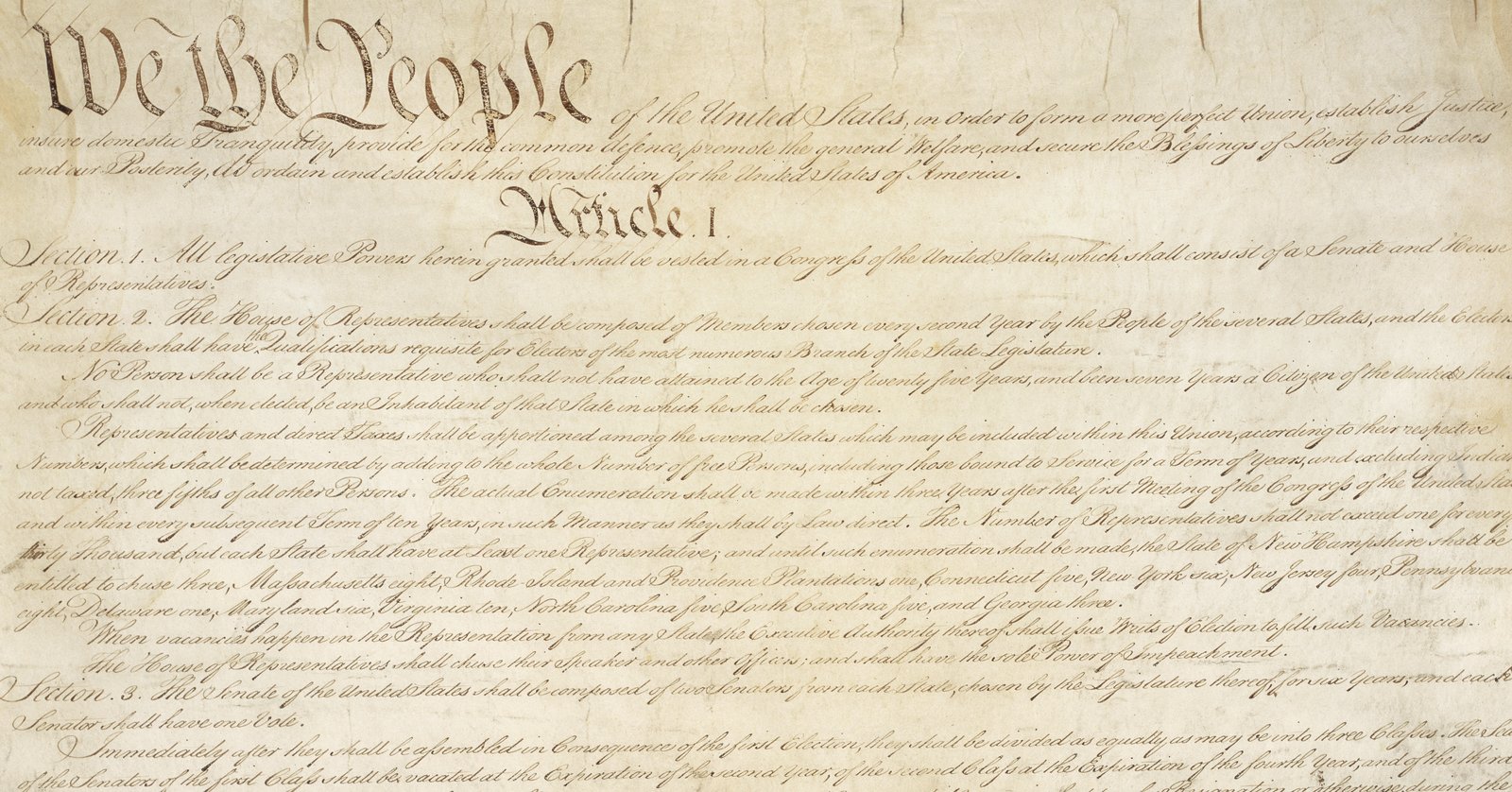
The U.S. Constitution’s Preamble pledges to “secure the Blessings of Liberty to ourselves and our Posterity,” giving voice to an old and, by 1787, widely shared idea that one generation owes something to those who follow (Ball, 2000). But the pledge was mainly rhetorical. The drafters never enumerated what current generations owed future ones, or how the obligation should be met (Hoffer, 2013). In 1789 Jefferson and Madison took up those questions in private correspondence. Neither doubted that an obligation existed; their disagreement was rather over what that obligation required. Jefferson held that the earth belongs “in usufruct” to the living: each generation holds it in trust and should not bind the next with its debts, laws, or constitutions, which he proposed should expire every nineteen years so each generation could govern itself. Madison replied that generations overlap and build on one another, and that the improvements one generation makes become part of what the next inherits (see Note 1).
The inheritance they had in mind included debts, property, and the institutions of government. What neither Jefferson nor Madison imagined was that human action could alter the biosphere at a planetary scale. We now live in what is widely called the Anthropocene: a period in which humanity has become a primary driver of change in the earth’s climate and ecosystems (Crutzen, 2002). Climate change, biodiversity loss, soil depletion, and ocean acidification will affect generations to come. Our obligation to Posterity must now be extended to hold in trust the natural resources and ecological systems future generations will depend on. How to meet this obligation is a question neither founder worked out, and one that has become even harder now that we know a single generation has the ability to damage nature beyond repair.
The Constitution’s framing was also limited along another, more familiar axis—who counted as “ourselves and our Posterity” in the first place. The “We the People” whom the founders had in mind were white, male, propertied, and free. Frederick Douglass denounced this exclusion in his 1852 address “What to the Slave Is the Fourth of July?” turning the founders’ own principles into an argument for emancipation (see Note 2). Americans have struggled to create a more inclusive treatment of the Constitution’s “People” throughout the country’s 250 years of existence. Bringing “our Posterity” into that inclusive vision raises special challenges. Every previous expansion has been driven by the excluded themselves, from the suffragists to the civil rights movement, demanding that the founding’s principles apply to them (Foner, 1998; see also Note 3). Future generations cannot do this. They do not yet exist. The work of including them falls entirely on present generations, who must choose to meet the obligation in the absence of pressure from those whose interests are at stake. Kathryn Sikkink (2020) has called this kind of obligation forward-looking responsibility: it arises not from past wrongs but from future harms we can prevent.
Disciplines as diverse as international law, moral philosophy, and economics have converged on the conclusion that what we owe future generations is not a particular world of our choosing, but the means for them to make their own. It is what the international law scholar Edith Brown Weiss termed the conservation of options: preserving a resource base diverse and intact enough that future generations can meet their own needs in their own way (Brown Weiss, 1989). We cannot know their circumstances or what they will count as a good life (Sen, 1999). What we can do is hand down a productive base, of natural, human, manufactured, social, and knowledge capital, no smaller than the one we inherited: the inclusive wealth on which any future wellbeing depends (Dasgupta, 2001; see Note 4). That criterion makes good on what both founders were reaching for. It permits Madison’s building, drawing down some assets to create others of greater value, within Jefferson’s limit, that the next generation not be handed a depleted or encumbered estate.
Recognizing what we owe Posterity is only the beginning. The institutions for acting on that obligation are still being built. At the international level, the scaffolding is going up. The Maastricht Principles on the Human Rights of Future Generations provide some initial guidance, by recognizing Posterity as rights-holders, not merely as interests to be considered (Maastricht Principles, 2023). Inclusive wealth offers an accounting framework to measure what we are handing on, and a global capacity to keep these accounts is beginning to take shape (UNEP, 2023; World Bank, 2024). The UN’s 2024 Declaration on Future Generations marks the first commitment to future generations adopted by the UN General Assembly as part of the Pact for the Future, though it has yet to grapple with the tradeoffs that arise when rights claims conflict (United Nations, 2024). At the national level, 41% of the world’s countries have written future generations into their constitutions, and the trend is accelerating (Araújo and Koessler, 2021). The U.S. has not been an enthusiastic participant in this recent institution building. The Preamble pledged the Blessings of Liberty to our Posterity; conserving their options is how we keep that pledge, leaving those who follow free to make a world of their own. What better time than our 250th anniversary to reclaim that promise?
Notes
Note 1: Jefferson to Madison, 6 September 1789 and Madison to Jefferson, 4 February 1790, in Founders Online, National Archives. Madison’s reply put the obligation in terms of accounts: all that was needed, he wrote, was “to see that the debits against [the living] do not exceed the advances made by [the dead].”
Note 2: Delivered before the Rochester Ladies’ Anti-Slavery Society, 5 July 1852; full text.
Note 3: See also Allen (2014), reading the founding documents as a standing commitment to equality that the excluded have had to make real, and Foner (2019), tracing how the Reconstruction amendments enshrined the post-emancipation expansion of equal citizenship.
Note 4: Inclusive wealth, which grew out of welfare economics and capital theory, is the per capita social value of the full array of resource stocks, natural and anthropogenic, that make up a society’s productive base. What is valued is not the quantity of these stocks but their social value: what they can contribute as means to creating wellbeing. A development path conserves inclusive wealth when that value does not decline over time, so that each generation passes on at least as much as it inherited. Because many different bundles of resources can meet this criterion, one asset may be drawn down as another is built up, as long as what is created is worth at least as much as what is given up. That worth is measured not by an asset’s market price but by its shadow value, what it adds to wellbeing; for some resources, scarce or irreplaceable, that value runs so high that nothing built in their place can make up the loss.
References
Allen, D. (2014). Our Declaration: A Reading of the Declaration of Independence in Defense of Equality. New York: Liveright.
Araújo, R. and Koessler, L. (2021). The Rise of the Constitutional Protection of Future Generations. LPP Working Paper No. 7-2021.
Ball, T. (2000). “The earth belongs to the living”: Thomas Jefferson and the problem of intergenerational relations. Environmental Politics, 9(2), 61–77.
Brown Weiss, E. (1989). In Fairness to Future Generations: International Law, Common Patrimony, and Intergenerational Equity. Tokyo: United Nations University; Dobbs Ferry, NY: Transnational Publishers.
Crutzen, P. J. (2002). Geology of mankind. Nature, 415, 23.
Dasgupta, P. (2001). Human Well-Being and the Natural Environment. Oxford: Oxford University Press.
Foner, E. (1998). The Story of American Freedom. New York: W. W. Norton.
Foner, E. (2019). The Second Founding: How the Civil War and Reconstruction Remade the Constitution. New York: W. W. Norton.
Hoffer, P. C. (2013). For Ourselves and Our Posterity: The Preamble to the Federal Constitution in American History. New York: Oxford University Press.
Maastricht Principles on the Human Rights of Future Generations. (2023). Maastricht Centre for Human Rights, Maastricht University.
Sen, A. (1999). Development as Freedom. New York: Knopf.
Sikkink, K. (2020). The Hidden Face of Rights: Toward a Politics of Responsibilities. New Haven: Yale University Press.
UNEP. (2023). Inclusive Wealth Report 2023: Measuring Sustainability and Equity. Nairobi: United Nations Environment Programme.
United Nations. (2024). Declaration on Future Generations. Annex II to the Pact for the Future (A/RES/79/1). United Nations.
World Bank. (2024). The Changing Wealth of Nations 2024: Revisiting the Measurement of Comprehensive Wealth. Washington, DC: World Bank.